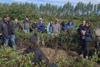
Committee seeking to boost climate resilience, productivity, and profitability in Chile’s blueberry sector

CBC regenerative agriculture

Image: Chilean Blueberry Committee

The Chilean Blueberry Committee has announced that it has successfully completed the first year of its regenerative fruit farming demonstration pilot projects. The initiative, supported by Corfo Ñuble and Biobío, aims to transform orchard management practices in the southern and south-central regions of the country.

The first phase of the trial involved two orchards with contrasting soil conditions: one with compacted sandy loam and low organic matter in Ñuble, and the other with sandy soil and low organic matter in Biobío. The results were observed during two recent Field Days organised by the trade association at Agrícola Lomas de Membrillar in Portezuelo and Agrícola Pizani in Los Ángeles.

Julia Pinto, technical manager of the Chilean Blueberry Committee, commented: “These field days were held to demonstrate the operation of the pilot projects, specifically focused on regenerative fruit growing. Therefore, the focus was on showcasing the results and changes obtained after a year of intervention in two orchards with different soil conditions. The benefits achieved in each soil condition were demonstrated, along with the interventions carried out, which included practices such as compost application, biological soil activation, and inter-row planting”.

Pinto said she was encouraged by the strong interest shown by the participating growers in applying these practices, motivated by the search for greater climate resilience and a potential reduction in crop costs.

“When evaluating, I think the most positive aspect is the interest people have in applying regenerative fruit farming practices, as this has two impacts: firstly, you can indeed achieve a better product, a more resilient plant, and secondly, these practices not only strengthen the plant against the climate but also allow for lower costs by making better use of fertilisers,” she said.

Early results after 14 months of work, show progress in fruit quality and the recovery of the soil’s physical, biological, and chemical structure. According to Pinto, the objective was to generate a more robust plant that could “take what it needs from the soil” efficiently.

She pointed out that, beyond its environmental benefits, regenerative fruit farming offers direct competitive advantages. “By activating the roots and the microbiota, nutrient absorption is optimised, allowing for a reduction in the use of synthetic fertilisers and, therefore, a decrease in production costs,” she noted, adding that this management practice increases water and thermal resilience.

“The ultimate goal is clear: to position Chilean blueberries as a high-quality crop, sustainable over time and capable of thriving in an increasingly unpredictable climate,” Pinto concluded.