First crop picked has been sent for post-harvest testing to assess fruit quality
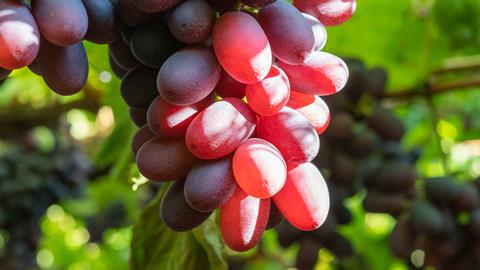
Researchers in Chile’s central zone report promising initial results for a trial to grow table grapes with less water by using sensors to monitor soil moisture and weather, without compromising on their quality.
They say the project, organised by Inia La Cruz with support from Corfo Valparaíso, achieved a 50 per cent reduction in irrigation for table grapes during its first season. The harvested fruit has now been sent for analysis to see whether it maintains the same quality as fruit grown using traditional water management techniques.
Chile has around 24,000ha of table grape production, of which 90 per cent is destined for export, so any improvement in its production efficiency has a direct impact on the sector’s competitiveness.
According to Inia, the project doesn’t aim to reinvent irrigation from scratch but rather demonstrate that production can be achieved with half the water without sacrificing quality.
The team, led by Dr Carlos Zúñiga Espinoza, installed demonstration units in local farms, where only one variable was manipulated: irrigation. Using soil moisture sensors and data from weather stations, a precise water replenishment system was implemented. Everything else – fertilisation, pest control, canopy management, etc –remained unchanged.
The results of the first season were significant. In one farm, the Inia system applied 2,943 cubic meters per hectare until harvest, compared to the 5,700 cubic meters per hectare applied by the farmers.
“We managed to reduce the amount of water used in that field by almost half,” Zúñiga said. “If we extrapolate this saving to a thousand hectares, the water we would be saving is enough to supply a population of 40,000 people for a year. That is the scale of the impact we are seeking.”
To measure the impact of lower water use on fruit quality, the harvested samples, both those from the efficient irrigation method and those from traditional management, were sent to the post-harvest laboratory at the University of Chile for evaluation on size, firmness, Brix and colour, parameters.
“We need to know if this grape, grown with less water, remains competitive. Because if the fruit doesn’t sell, the savings are useless,” the researchers said. The results will be available in the coming weeks, once the samples complete the simulated storage period.