New data processed by industry body Fepex reveals household fresh produce consumption slipped to 3.25mn tonnes in the first half of 2026
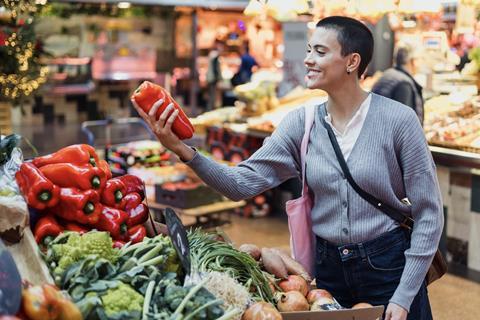
Consumption of fresh produce in Spanish households stood at 3.25mn tonnes in the first half of 2026, a 2.8 per cent decrease on the same period of 2025.
This decline was seen in both fruits and vegetables, while total expenditure remained virtually stable, edging down 0.4 per cent to €7.66bn, according to data from the Ministry of Agriculture, Fisheries and Food’s Food Consumption Panel, processed by Fepex.
Fresh fruit accounted for the largest volume of consumption at 1.74mn tonnes in the first half of the year, a 3.3 per cent drop.
Expenditure on fruit fell 1.8 per cent, from €4.32bn to €4.25bn, while the average price stood at €2.44 per kg, an increase of 1.6 per cent.
Among the fruits most represented in the household shopping basket, a notable decline was seen in oranges, with consumption falling 8.6 per cent to 315,000 tonnes.
Apples consumption dropped 8.9 per cent to 186,000 tonnes, strawberries slide 9.1 per cent to 97,000 tonnes, and mandarin consumption was 7.4 per cent lower at 129,000 tonnes.
Consumption also decreased for lemons (down 6.8 per cent), pears (down 4.2 per cent), and bananas (down 4 per cent), Fepex outlined.
Not all fruits suffered a fall, however. The country’s apricot consumption grew by 23.3 per cent on the same period of 2025, surpassing 20,000 tonnes.
Cherry consumption rose 18.8 per cent to 36,500 tonnes; grape consumption increased 14.1 per cent to 37,600 tonnes; and plum consumption increased by 10.3 per cent.
Meanwhile, watermelon consumption rose 9.7 per cent to 136,000 tonnes, and peach consumption grew by 9.6 per cent.
Spain’s consumption of fresh vegetables stood at 1.1mn tonnes in the first half, down 2.6 per cent year-on-year.
Despite this reduction in volume, household spending increased by 2.9 per cent, reaching €2.95mn.
The average price for vegetables overall stood at €2.65 per kg, 5.7 per cent higher than a year earlier.
Consumption of tomatoes – the leading vegetable consumed in the country’s households – fell 1.7 per cent to 247,000 tonnes in the first half of the year.
Onion consumption decreased by 2.3 per cent; consumption of lettuce, escarole, and endive dropped 3.7 per cent; and green bean consumption fell 5 per cent.
The sharpest decline was seen in cabbages, Fepex reported, which saw an 8.9 per cent reduction in household consumption.
Pepper consumption was the only one of these products to remain virtually stable, showing slight growth of 0.6 per cent.
For potatoes, household demand reached 403,000 tonnes in the first half of 2026, a 1 per cent decrease, while expenditure fell 7.2 per cent to €470mn.
”Household consumption data for the first half of 2026 once again show a decline, contrasting with the slight growth seen in 2025, when consumption rose by 1 per cent,” Fepex commented.
”The 2025 recovery stands as an exception to the downward trend in household fruit and vegetable consumption observed in recent years.
”Consequently, Fepex believes it is increasingly necessary to promote measures that boost the presence of fruits and vegetables in people’s diets – strengthening promotional activities and nutritional education while highlighting their essential contribution to a balanced diet,” it added.