Importer sees further chance to grow and expand product range, as Dutch consumers buy record volume of the fruit
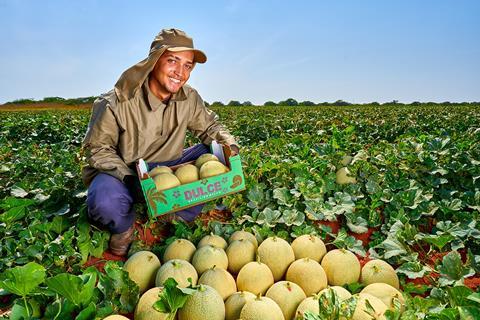
Consumers are eating more melons than ever before in the Netherlands, where Dutch importer Staay Food Group has confirmed the category continues to perform well, with strong demand reported in both its domestic market and Europe as a whole.
Against a backdrop of record consumption and continued strong demand, it confirmed that its first shipments of yellow honeydew, Galia, Piel de Sapo, and mini watermelons from Brazil were expected to arrive from week 36, so from 31 August onwards.
According to recent figures from trade organisation GroentenFruit Huis, consumers in the Netherlands ate a record volume of melons in 2025, with consumption reaching 3.1kg per person.
Watermelons remained by far the most popular variety, with Brazil, Spain, and Costa Rica the leading suppliers to the Dutch market.
According to commercial director Matthijs Vlasblom, demand has been strong for a few years and continues to grow.
“Watermelon remains the driving force behind the category, while [yellow honeydew] melons are also rapidly gaining popularity,” he said. “Consumers appreciate the consistent quality, sweet taste, and versatility of these melons.”
New products
This year, Staay will introduce Charentais melons to its product line-up. The flavourful variety is expected to arrive a few weeks into the season and apparently offers opportunities for retailers, foodservice operators, and speciality stores looking to offer their customers more distinctive flavours.
The outlook for the Brazilian season is also said to be positive, with good crop development expected to offer a solid foundation for the company’s private labels Dulce and Nero in terms of both quality and availability, as supply increases in week 37 and continues until around week 10, when Costa Rica takes over.
“Thanks to our own growing facilities and strategic partnerships, we are able to supply customers with a wide variety of melons year-round, with stable volumes and consistent quality,” Vlasblom concludes.