Adverse weather conditions in Morocco and Spain have disrupted berry supplies to Europe this winter, with buyers turning instead to Egypt
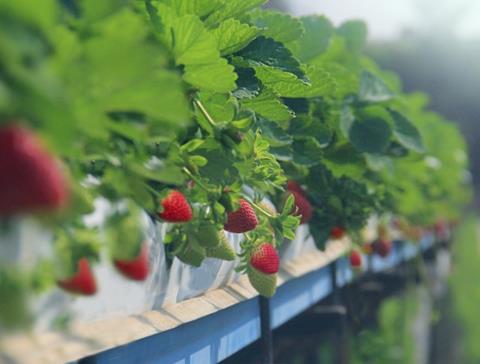
Egyptian exporter Pico is seeing unusually strong demand for strawberries this winter as adverse weather disrupts production in Spain and Morocco, pushing European buyers to seek alternative sources.
“We’ve been a little stressed,” admits Muhammad Fayed, regional sales manager at Pico. “The weather in Spain and Morocco has not been the best, so all the retailers across Europe are looking for alternatives, and Egypt is the focus.”
Demand from Europe commonly tapers off sharply after December, but this season things are different. “At the end of January and beginning of February we usually see programmes from the UK and the continent decreasing dramatically,” Fayed explains. “This year we’re seeing demand which is not usual for this time of the year.”
Egypt is currently in its second flush of strawberry harvesting, though cooler conditions are limiting volumes and complicating quality management. “We have cold weather in Egypt – 7-10 degrees at night,” he says. “That’s not helping the berries to colour up, which is a problem.”
To manage this, Pico is carefully allocating volumes across multiple markets. “We are trying to select the fullest colouration for the UK and Europe,” Fayed says, “and the rest goes to markets like East Asia, where they actually like the white shoulders and don’t mind fruit that’s only 60-70 per cent coloured due to the increased shelf-life.”
Nevertheless, balancing demand has proved challenging. “Everybody is calling us saying they need volumes,” he says. “Unfortunately we won’t be able to satisfy everyone.”
Logistics remain a major pressure point, particularly for airfreight. “Right now, 60-65 per cent of the price of one kilo sent to Europe is just shipping,” Fayed says. “You have to cover all your production and farming costs with what’s left. That’s simply not sustainable. We have been suffering from a lack of space as well as the year-on-year increase in charges.”
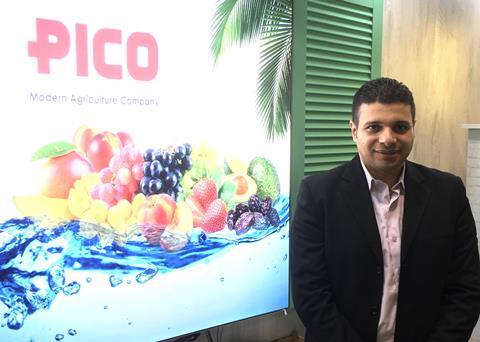
As a result, Pico is steadily increasing seafreight. “Over the last four years, we’ve been shifting away from airfreight to seafreight and it’s been successful,” he reveals. “This year we’re around 65 per cent air and 35 per cent sea. Our target is 50-50. Seafreight is not perfect, but it’s a workable solution if you have stable weather and stable quality.
“The shipping rate for seafreight is significantly lower to air, and thanks to the ro-ro service operating out of Egypt, it’s now just seven days door to door via one truck, with the cold chain maintained. The arrival quality is as good as by air if not better. So we are trying to focus on doing that more.”
Growth in blues and exotics
Beyond strawberries, Pico is also expanding “conservatively” into blueberries, though Fayed is clear-eyed about Egypt’s position. “The UK market was never our main target,” he says. “We are not competitors to Morocco at this stage. We are aiming for a very small share of the market, and we are staying conservative when it comes to varietal development and selection.
“We are trying different breeding programmes to make sure we have a nice set of varieties on the ground that serve the purpose. We don’t just want blueberries, but blueberries with a good shelf-life, quality and taste for particular markets. We knew from the beginning we wouldn’t compete head-on with Morocco or Spain. So we are focusing on the Gulf, East Asia and selected European programmes when they experience shortages.”
Exotics such as mangoes and avocados remain another growth area, with acreage increasing fast. “The UK is an important part of our programme,” says Fayed. “But for both mangoes and avocados, local and Gulf markets often give better returns than the UK and Europe. They have become commodities. The Gulf also accepts all sizes, as long as the fruit looks and tastes nice.”
During the Covid pandemic, Pico launched its own consumer app for the domestic market, and that led to a paradigm shift in how the company perceived the market.
“That changed the way we look at the local market,” says Fayed. “You are talking directly to the consumer, learning from the consumer about how to improve the products. We now want to take it further and expand, providing even more products on the platform.”
With weather volatility reshaping global sourcing patterns, Fayed believes adaptability will be essential. “Weather is becoming a decisive factor in sourcing,” he concludes. “Things are changing year by year, and Egypt can be a part of the solution.”


