Industry targets large export deal this season as it continues to pursue China market access
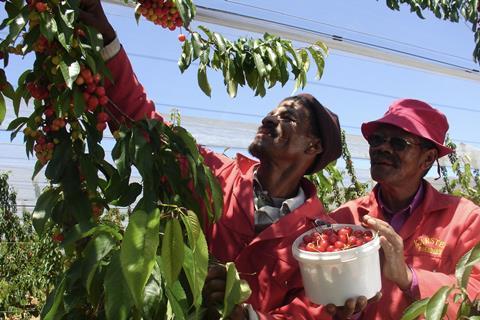
South Africa is forecast to export around 58 per cent of its cherry production this year, with another 28 per cent sold domestically.
In terms of both local and overseas markets, the industry is in a very positive mood with excellent weather so far this season.
However, in global terms South Africa remains a very small cherry exporter, while locally the country also has to take steps forward to become a leading summer fruit player in the eyes of consumers.
Across South Africa cherry packers have introduced promotional campaigns to increase sales, but in general terms the fruit is still seen by consumers as expensive when compared with other fresh produce.
Given the relatively short season of December-January, cherries have some way to go to break into the mainstream consumer markets.
That is why the export market is so important for the industry. Last season 60 per cent of South African cherries were exported to the UK, 18 per cent to the EU and 12 per cent to the Middle East.
Marketers and growers expect this supply split to be repeated this year.
There are now more than 800ha of cherry orchards in the country, with Ceres in the Western Cape having become the cherry capital of South Africa.
According to Hortgro, the cherry industry is optimistic about current negotiations with China over market access.
There’s a possibility that virtual cherry inspections will take place before the end of the year, and if that goes well, the road will be paved for the first exports to China in the 2026/27 season.
“A second season of trials to determine the effect of cold treatment on cherries, ensuring compliance with the Chinese protocol, is presently underway,” said a Hortgro spokesperson.
“The first season’s trials yielded promising results, but they need to be confirmed with data from a second season.”
The harvest in the northern regions of the country has already been completed and growers in the Free State and Western Cape are presently in their peak harvest season.
“The volumes up north have been better than expected, and we are also hoping for a bumper crop in the Western Cape,” the spokesperson added.
While there is a very positive season underway, in international markets Chile looms large as the dominant supplier.