The group is moving its innovative two-step wash technology from laboratory validation into commercial applications
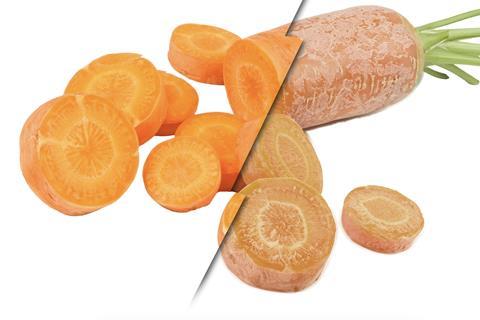
Food Freshly will present its newly developed, patented two-step wash process at Fruit Attraction 2026, with a particular focus on carrots and baby carrots.
The group, a specialist in shelf-life solutions for the fresh-cut convenience sector, said the process is designed to reduce microbial load while maintaining product quality and supporting shelf-life extension.
The new process combines two coordinated treatment steps that complement each other while maintaining the quality and integrity of the produce, Food Freshly explained.
The first step is designed to reduce microbial load and remove organic matter and adhering soil from the product surface – relevant for carrots, which are handled with skin-on and are frequently peeled and cut before packing.
The subsequent antioxidant treatment completes the process, helping to maintain colour, texture and freshness.
The process has been under development since 2018 and has undergone more than 250 trials, it explained, including microbiological testing in Food Freshly’s Biosafety Level 1 laboratory.
Testing has covered a broad range of whole and fresh-cut fruits and vegetables under different processing conditions.
The new technology has been evaluated across a broad range of applications, including pineapple, blueberries, carrots and baby carrots, arugula, coconut chunks, peppers, cantaloupe melon and grapes, Food Freshly confirmed.
“Fresh produce can carry substantial microbial loads depending on the commodity, growing conditions and processing steps, while water washing alone may provide only limited reduction,” said Benjamin Singh, CEO of Food Freshly.
“Our approach is to combine meaningful microbial reduction with the quality and shelf-life requirements of the finished product.
”After more than 250 trials, we are now increasingly moving from laboratory validation into commercial applications,” he said.
The underlying technology was filed for patent and has since been granted in the EU, US, Canada, Mexico, Japan and China.
Patent examination is ongoing in Australia, Brazil, India, South Korea and other countries, the group outlined.
The process is not positioned as a biocide or disinfectant, but as a wash process for fruits and vegetables designed to reduce microbial load as part of the production process.
Food Freshly said it sees ”significant potential” for the technology in, for example, the Spanish fruit and vegetable industry, with the first commercial projects and customer trials already underway in the country.
“The range of potential applications is very broad,” said Alejandro Morant, sales manager Spain, Portugal and Latin America at Food Freshly.
“We are currently looking at applications including pineapple, blueberries, carrots and baby carrots, as well as arugula and other products where microbial load, product quality and shelf-life are important processing considerations.”