Argentine trials show William’s pears packed in MCPBag with Vidre+ ripened slower than those in standard packaging
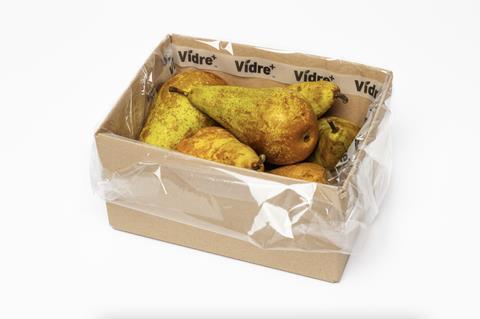
Fresh Inset, the creator of Vidre+, has released the results of trials conducted in Argentina that found its technology extended pear shelf-life by four to eight days.
Trials showed that William’s pears packed in MCPBag utilising Vidre+ technology ripened ”significantly slower” than those in standard packaging.
Results from university testing showed that using the MCPBag during fruit packing and then storing the pears for as short a time as four days, or up to 120 days in regular atmosphere storage and then eight days at room temperature, reduced ethylene production 2.7 fold from 218 units in the normal bags used by packers to about 80 units of ethylene with the MCPBag.
Tool for managing freshness
“With Vidre+ technology implemented in MCPBag, we are not just slowing ripening – we’re redefining what a fruit package can do,” said Tim Malefyt, chief technology officer at Fresh Inset.
”With this technology, we’ve proven that even high-respiration fruit like pears respond to smart, targeted 1-MCP delivery, giving packers a tremendous new tool for managing freshness throughout the supply chain.
”This technology turns a bag or tray into a freshness system, without needing sealed rooms or heavy infrastructure,” he noted.
MCPBag, using Vidre+ technology, provides a small coated surface of a controlled-release 1-MCP inside fruit-specific packaging.
This packaging then gradually releases 1-MCP over a 24-hour period, inhibiting ethylene response and thereby slowing ripening and softening of the fruits.
Vidre+, developed by Fresh Inset, takes this concept further: a low-cost sticker or label placed inside the existing carton, clamshell, or bag releases 1-MCP over time, enabling active shelf-life extension inside the pack without requiring specialised treatment rooms or additional Capex.
According to Fresh Inset, the technology could reduce global fruit and vegetable waste by up to 9.46mn tonnes annually.
Research in detail
The study was carried out by a team of researchers at IDC Patagonia in Argentina, testing how pears behave when packed in 1-MCP Bags versus regular bags during short-term (four days) and long-term (120 days) cold storage.
After storage, pears were exposed to room temperature shelf life testing.
Regardless of storage time, pears in standard bags started to ripen quickly – producing much more ethylene, the natural gas that triggers softening and yellowing.
Those kept in MCPBag utilising Vidre+ released 60 per cent less ethylene after eight days, staying firmer and greener for much longer.
The result of using the MCPBag was ”noticeably firmer fruit” that held its colour better, while untreated fruit was already soft and yellow.
MCPBag powered slowed the ripening process and extended shelf life by eight days for the short-term storage and four to five days for the long-term storage period.