Researchers have identified a genetic system that synchronises flower development and fruit formation in tomatoes, with hopes for varieties that can withstand extreme temperatures
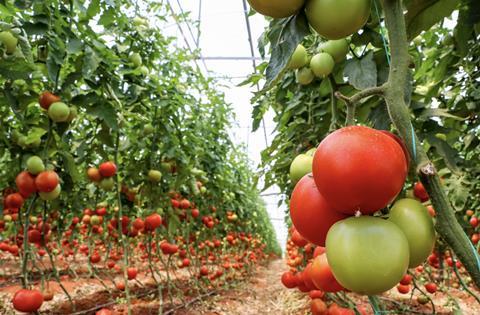
Researchers in Germany and Israel have uncovered a genetic mechanism in tomatoes that coordinates flower development and fruit formation, a finding that could lead to the development of varieties that extend tomato production into colder months and increase the reliability of winter harvests.
Temperature extremes are a major challenge in the tomato business, with the cold reducing pollen viability and preventing fertilisation, while heat has been shown to interfere with fruit set.
But this study, led by Professor Naomi Ori and doctoral researcher Nave Man of Hebrew University, in collaboration with researchers from the Leibniz Institute of Plant Biochemistry in Germany and Israel’s Agricultural Research Organization (Volcani Institute), showed that fertilisation may not be necessary at all.
The team concentrated on a system involved in the plant’s response to auxin, a hormone that regulates growth and reproduction, using Crispr technology to alter particular genes to gauge their influence on flower development and fruit production.
“They discovered that two closely related genes, SlARF8A and SlARF8B, work together to coordinate the development of the flower’s male and female reproductive organs,” a press release from the Hebrew University stated. “One of the genes also helps control when the flower’s anthers open to release pollen – a critical step for successful fertilisation.”
One combination enabled the gene-edited plants to begin developing fruit without fertilisation, a natural process known as parthenocarpy, which produces seedless tomatoes.
“These plants began producing fruit earlier under all tested conditions,” the researchers stated. “Under cold winter conditions, they were able to produce fruit when the other tomato plants produced little or none.”
In winter greenhouse experiments, the gene-edited plants apparently produced more than 18 times as many fruits as the regular plants early in the growing season. “By harvest, they yielded six times more ripe tomatoes and ten times the total weight of ripe fruit,” the release stated.
In addition, the researchers revealed that most tomatoes on the modified plants had ripened and reddened by the end of the experiment, whereas most fruit on the unmodified plants was still green. The gene-edited plants also proved to be more compact, they said, meaning more of their energy was going toward producing fruit rather than stems and leaves.
“Our findings show how tomato plants use a carefully balanced genetic system to coordinate flower development, pollen release and the beginning of fruit growth,” said Ori. “Understanding this system may eventually help us develop crops that produce fruit more reliably when temperatures make normal fertilisation difficult.”
Further studies are set to determine how such genetic changes affect fruit size, flavour and overall quality, and whether such varieties have the potential for commercial success.