Water scarcity, climate change and rising costs are driving a new era of tomato production in Spain
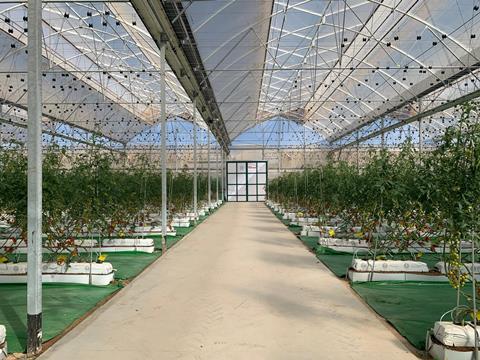
Producing more with fewer resources is no longer simply a question of improving efficiency. It is becoming a prerequisite for remaining competitive. That is the view of Ana Hernández, research director at Grupo Hortofrutícola Paloma, who says the company has been working for years to combine technology, automation and more precise resource management in response to an increasingly challenging production environment.
“Producing more with less is no longer an aspiration, it is a condition for survival for the horticultural sector,” she tells Fruitnet.
Water is at the heart of this challenge, particularly in southeastern Spain, where conventional water sources are becoming increasingly limited and alternative supplies such as desalination come at a significant cost. Grupo Paloma relies primarily on desalinated water, giving the company a degree of security of supply but also leaving it with what Hernández describes as the highest cost per cubic metre in Spain.
It’s not surprising, therefore, that the company prioritises on using every drop as efficiently as possible. Around 90 per cent of Grupo Paloma’s greenhouses are now hydroponic, allowing the company to deliver precisely the amount of water and nutrients required by the crop at each stage of its development. The approach reduces water and fertiliser consumption while also improving the consistency and quality of the tomatoes, according to Hernández.
She believes the real opportunity lies in combining technology with agronomic expertise. “Producing more with less means combining data, technology and agronomic knowledge to make better decisions at every stage of production,” she explains.
That philosophy has underpinned an ambitious modernisation programme launched by the company in 2020. To date, more than 70ha of conventional greenhouses have been converted into high-tech multispan structures. The new greenhouses, which reach more than 8m in height, incorporate double roof and lateral ventilation, heating and thermal screens. Together, these systems give growers much greater control over temperature, humidity and ventilation, reducing reliance on manual intervention while improving energy efficiency.
The investment is also designed to tackle one of the biggest threats facing Mediterranean horticulture: increasingly unpredictable weather. What’s more, the ability to control the greenhouse environment means Grupo Paloma can extend its production window while maintaining tomato quality when outdoor conditions become more challenging.
“Climate change is already translating into more intense heatwaves, greater pest and disease pressure and increasingly irregular weather, which directly affects crop planning,” says Hernández. “The high-tech greenhouse model is therefore about more than simply increasing yields. It is an attempt to make production more predictable in an environment where predictability is becoming harder to achieve.”
Grupo Paloma is continually testing technologies that could take this approach further, although Hernández stresses that new solutions must demonstrate both agronomic and economic value before they are rolled out across the business.
One area under evaluation is CO₂ enrichment in tomato greenhouses. The technology has the potential to improve crop performance, but its economic viability in a warm climate such as southeastern Spain is challenging because frequent ventilation can make maintaining elevated CO₂ concentrations more difficult to achieve. The company is also investigating the use of artificial intelligence to optimise hydroponic irrigation, with the aim of fine-tuning water use even further.
Rather than adopting technology for its own sake, Grupo Paloma is looking for innovations that can deliver a clear return in productivity, resource efficiency or profitability. “We continue to focus on integrating data and technology into every stage of cultivation, progressively incorporating those innovations that demonstrate a clear return, both productive and economic, before scaling them across the whole operation,” Hernández says.
The company’s commitment to innovation comes as Spanish horticulture faces pressure on several fronts. Water availability and cost are perhaps the most pressing concerns, but they are closely linked to climate change, which is increasing the frequency of extreme heat, disrupting production planning and contributing to greater pest and disease pressure.
At the same time, Spanish growers face competition from countries with lower production costs and, in Hernández’s view, in some cases less demanding regulatory requirements. That creates a difficult equation for growers operating under European standards on water, environmental protection, food safety and labour, while also facing rising costs for energy, labour and inputs.
Hernández argues that the answer cannot be to compete solely on price. For Grupo Paloma, the strategy is instead to use technology and innovation to improve efficiency while increasing the value of the product through quality and traceability.
Ultimately, Hernández sees the future of Spanish tomato production as a combination of water security, technological innovation and the ability to anticipate regulatory and environmental pressures. She says the transformation of Grupo Paloma’s greenhouses is a practical response to that changing landscape, providing more controlled production, more precise use of resources and greater resilience to climate variability.