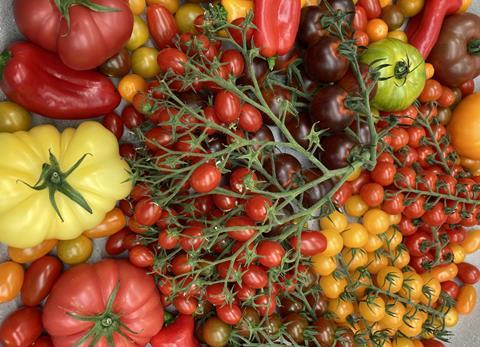
Belgian tomato growers have faced shelf-life issues in recent weeks due to repeated heatwaves, making nearby markets like the UK especially attractive
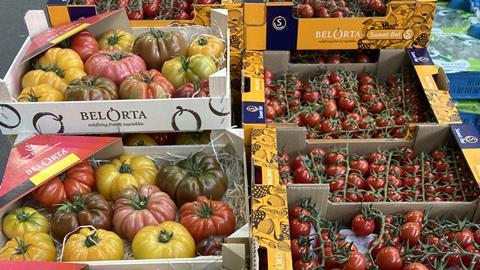
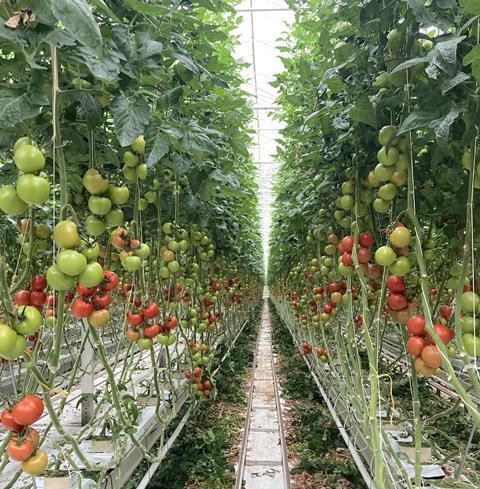
Belgian greenhouse tomato growers are enduring one of the toughest seasons in recent memory, with exceptionally high temperatures across Europe creating major challenges around quality and shelf-life, according to Maarten Verhaegen of Belgian cooperative BelOrta.
“For our growers, it has been a very difficult season, and still is,” he told Fruitnet. “I’ve been in the business for 15 years, and I’ve never seen a season like this.”
According to Jan Engelen of the Hoogstraten cooperative, growers have reported blossom-end rot, cracking, yellow spots and other heat-related issues.
Those problems are not affecting the entire crop, Engelen stressed, but they have reduced the availability of produce meeting the Flandria quality label standard.

The heat initially brought a positive side-effect for the trade, with tomato consumption at high levels and volumes sold remaining strong. But over the past four weeks, quality issues have worsened.
“The biggest problem at the moment is quality,” reported Verhaegen. “Shelf-life and colouration are an issue. It’s not been easy for the growers.”
With new varieties often bred more for their ToBRFV resistance, some are proving less resilient in extreme conditions. “We are seeing that the new varieties are not always better than the old ones,” said Verhaegen, “especially when it comes to high temperatures. I hope to see varieties develop in a good direction for everybody in Europe, focusing not just on resistance, but also on taste, appearance and colour. At the moment the focus is on resistance, and that’s not ideal. For my team here, we prefer to sell a non-resistant but good quality tomato.”
Hoogstraten has a broad portfolio of speciality tomatoes, including cherries on the vine and San Marzano varieties. This has made the search for resistant varieties more complicated, since smaller segments attract less attention from seed companies. But Engelen points to a promising example involving Coeur de Boeuf tomatoes, with one Hoogstraten grower trialling a resistant variety this year.
“That’s a segment which is not huge,” he said. “But we did find a variety with resistance, and this year they have grown it, and it’s looking very promising.”
Longer journeys expose issues
The quality challenge has depended greatly on the distance to market. BelOrta supplies significant volumes to the UK, and has experienced few issues, but Verhaegen said problems have been encountered sending to southern European destinations including Spain, Italy, Portugal and the south of France.
“Most of our UK clients load today and sell the next morning so the chain is shorter,” he said. “Produce that takes two to three days to get to their destination – that’s where we saw the bigger issues. We normally export a lot to Spain and Italy, but that’s been a very difficult business this season.”
The issue has not been confined to tomatoes. Aubergines have also experienced shelf-life problems, although cucumbers and bell peppers have performed considerably better than last year.
Within tomatoes, vine varieties have been the strongest performer. Loose tomatoes, meanwhile, have faced substantial quality issues, while speciality types including Rosanna and Coeur de Boeuf have also struggled.
“For those tomatoes, the problems will continue for another week or two at least,” Verhaegen predicted. “The one good thing is that we have around 50 per cent of the volume we should have at this time of year, but consumption has dropped because of the holiday period. So the supply and demand balance has been quite good for prices.”
UK presents opportunity
Over the last five years, the reputation of BelOrta has grown steadily in the UK, which the cooperative puts down to the freshness of its produce.
“In the last few seasons we have started working more with UK-based customers,” said Verhaegen. “They start buying in around week 40-42, when they start importing a lot. We have had a couple of big UK-based customers that have started to buy directly from BelOrta, not only because of the price, but because of the freshness.
“That is our main USP. We don’t speculate with fruit and vegetables. If we know there will be fewer tomatoes on the market next week, we don’t fill our fridges full of tomatoes and sell them next week. We sell every day, and we start every day with new fresh produce.
“We also have a very good working relationship with Belgian and Dutch export companies, which also sell significant volumes in the UK and do an excellent job.”
Engelen believes climate change could create more opportunities for Belgian suppliers to the UK as retailers seek to boost the resilience of their sourcing programmes and reduce their reliance on the likes of Spain and Morocco.
“The relatively short supply chain gives Belgian growers a potential advantage over produce travelling from Spain or Morocco,” said Engelen, “particularly when extreme weather is already challenging product quality.”
Despite the immediate pressures facing growers, Engelen said that sustainability remained key. Hoogstraten has just completed its first CSRD report, even though changes to European reporting deadlines mean it was not obliged to do so at this stage.
He said the report already demonstrated good improvements in CO₂ emissions at Hoogstraten, as well as progress in areas including labour and water. For Hoogstraten, Engelen said, climate change, energy security and sustainability are not separate issues from the day-to-day business of growing tomatoes, but are increasingly intertwined.
For now, he noted, the spike in energy prices is less alarming than at the start of the Russia-Ukraine war, when many greenhouse growers elected not to grow during the winter months. Engelen said he had not heard of producers considering such steps this winter, but he warned that geopolitical developments could quickly change that calculation for growers.