Country seeks to secure its leadership against rising competition from South American suppliers and stricter environmental rules
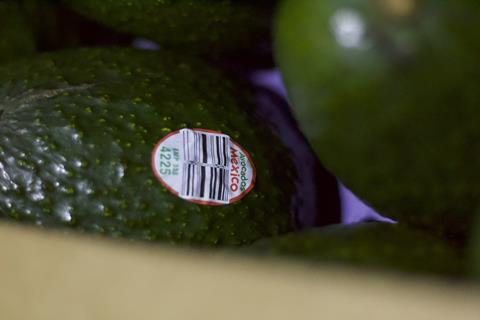
Avocado production in Mexico is forecast to reach 3.16mn tonnes by 2030, according to a Mundi study on the outlook for this fruit in 2026. The report pegs the value of exports in that year at US$26bn-US$27bn.
Mundi predicts that Mexico will maintain its global leadership in avocado production and exports through 2030, despite the rise of international competitors.
“Mexico is expected to continue being the world’s leading avocado producer, with moderate but sustained growth. It is projected to maintain the largest share of international trade, increasing its exports by 5 per cent in the coming years,” the study said.
According to the report, the increased presence of avocados in global diets, the shift in eating habits toward products perceived as healthier, greater access to fresh food, and the incorporation of avocados into food supply chains and foodservice establishments will fuel the growth in Mexican production and exports in the coming years.
“Added to this is the expansion of the middle class in emerging economies, which broadens the consumer base with the purchasing power for products with higher nutritional value,” Mundi noted.
Mexico is the leading global producer and exporter of avocados, accounting for almost one-third of world production. The US is its primary market, taking 87 per cent of exports. Canada receives a further 6.5 per cent of shipments.
The study notes that the future of Mexican avocados depends not on producing more, but on “producing better, diversifying markets, and strengthening the sector’s resilience to external shocks”.
While North America is expected to remain the primary avocado consumer market in the short and medium term, global growth dynamics are gradually shifting, with the Asia-Pacific and European regions projected to experience above-average growth rates in the coming years.
According to Mundi, this geographic expansion of demand will create a larger, but also more competitive, global market. A gradual diversification of exportable supply is anticipated as new producing countries consolidate their production capacity, packaging, certification, and access to international markets.
Around 10.5mn tonnes of avocados were produced globally in 2024. Planted area is estimated to have increased by 85 per cent over the past decade.
In 2025, Mexico produced 2.75mn tonnes of avocados, and exports were valued at US$3.828bn. Five states accounted for 94 per cent of national output, with Michoacán leading the way on 73 per cent, followed by Jalisco with 12 per cent, the State of Mexico with 5 per cent, Nayarit with 3 per cent and Morelos with 2 per cent.
“Avocado yields have improved gradually and erratically, but to sustain the national supply, productivity per hectare must be increased, technological gaps between producers must be closed, and yields must be stabilised,” the study said.
The study highlighted that the main challenge for the Mexican avocado sector is not only sustaining its growth, “but also reducing structural vulnerabilities through greater regional diversification of production, improvements in productivity, and the strengthening of production chains within the country”.
Furthermore, it said Mexico’s success in 2026 will depend not only on the volume produced, but also on its ability to integrate traceability and sustainability technologies into every exported box, in order to ensure that the end consumer trusts the ethical origin of the product.
“Diversification toward value-added products will be key to protecting profit margins in the face of saturation in traditional markets and the inherent volatility of fresh fruit prices,” the study noted.
The report concluded that “those actors in the supply chain who manage to digitise their financial operations, optimise their cross-border logistics, and comply with global environmental standards will be the ones to lead the next era of growth for the ‘green gold’”.