PDO-certified volume similar to last season, but stricter selection criteria could result in better quality fruit and larger sizes
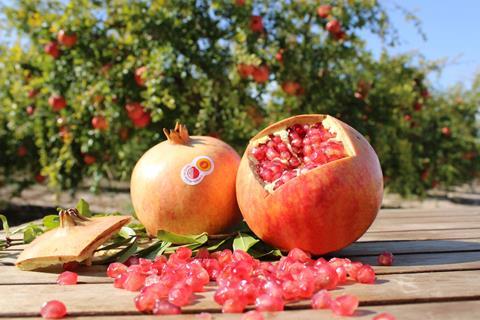
The Mollar de Elche pomegranate PDO expects to market around 50,000 tonnes of fruit this season. While this is a similar volume to last season, the label said this year’s crop features larger sizes and higher quality due to stricter selection criteria which has led to the removal of a larger quantity of fruit that did not meet commercial standards.
“The harvest will be similar to last year’s – around 50mn kg – but the quality will be higher,” said PDO president Francisco Oliva. Throughout the season, fruit showing damage from sunburn or scald was removed, as were smaller calibres. The result will be a more uniform harvest featuring larger fruit.
According to the PDO, the growing season has not been without challenges. High temperatures have had a greater impact on the crop than in previous years, particularly regarding the incidence of ‘albardado’. This causes skin burn on the fruit, rendering it unsuitable for sale through mainstream channels, although the pomegranate can still be utilised in other ways, such as juicing.
The PDO estimates that 10-15 per cent of production has been affected by this issue, compared to the usual figure of 6-8 per cent.
Around half of the fruit marketed under the PDO is sold domestically, while the remainder is exported to various destinations worldwide, including the Middle East and Brazil.
The Mollar de Elche is the only pomegranate in the world protected by a Protected Designation of Origin (PDO) status. The fruit is characterised by its distinctive sweetness and edible seeds.
There are around 860ha of production registered under the PDO, distributed among some 400 growers spread across 40 municipalities.
This crop remains a significant part of agriculture in the Elche area, as well as in other municipalities across the province and the Vega Baja region. Until a few months ago, the PDO had registered approximately 860 hectares of *Mollar* pomegranates, distributed among some 400 growers across roughly 40 municipalities.