Steve Nelson, owner and chief executive at Plant Sciences Genetics, speaks exclusively to Fruitnet about the company’s new open-market portfolio in Europe
How would you describe Plant Sciences Genetics and its history in Europe? Which varieties are you best known for?
Steve Nelson: Plant Sciences Genetics (PSG) has distributed its genetics in Europe for many years, developing and commercialising berry genetics through close collaboration with growers, marketers and nursery partners. PSGs’s portfolio in Europe has been particularly strong in strawberries, raspberries and blackberries, with varieties such as Victory Inspire and Majestic becoming well known within the berry industry.
We approach our European partnerships very collaboratively, striving to work with humility, curiosity and innovation. We work closely with commercial partners to test, evaluate and develop our genetics under real production and market conditions. That connection with growers and marketers remains a fundamental part of how we operate in Europe.
Why is moving from an exclusive/club model to open-market varieties important for PSG?
SN: PSG has set out to widen and deepen its genetic pool across all its berry breeding lines in EMEA, with the aim of offering growers robust and competitive varieties while also creating new opportunities for our customers to grow demand for their fruit sales. Since then, we have continued to expand our breeding activity and nursery network, offering growers a wider range of plant formats across our genetic portfolio.

This allows us to take our genetics into new markets and production systems, while continuing to strengthen the markets where PSG already has a strong position. The open-market portfolio is an important part of this expansion, complementing our established club partnerships rather than replacing them.
We remain strongly committed to the growers and marketing organisations that have invested with us in developing exclusive genetics. At the same time, selected PSG genetics will now be available to the open market, allowing us to reach more growers and expand across Europe.
Let’s talk about some of your most exciting varieties, starting with strawberries. What are the main benefits of Emerald Bay and Exalt?
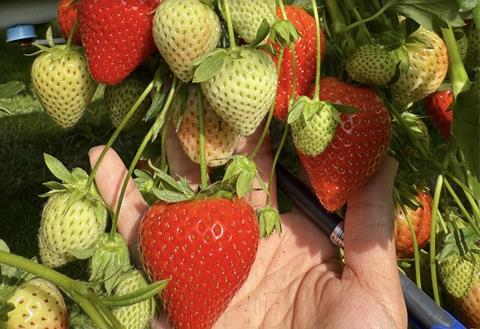
SN: Emerald Bay, a short-day strawberry, is one of the best flavoured strawberries in the PSG portfolio. A June-bearing variety with strong resistance to soil diseases and powdery mildew, Emerald Bay combines healthy, vigorous growth with high yield potential and produces nearly 100 per cent first-class fruit. The berries are consistently large, with an attractive conical shape, excellent firmness, with outstanding shelf-life.
Exalt is an everbearing strawberry variety that produces continuously from early spring until late autumn while maintaining consistent fruit size. Its berries have high visual appeal, great flavour and excellent shelf-life. The variety shows strong resistance to soil diseases and powdery mildew.
In raspberries, what makes Diligence stand out?
SN: Diligence is an early double-cropping raspberry variety with excellent floricane production potential. It produces premium-quality berries with excellent flavour, an attractive light colour that is retained after cold storage, and outstanding shelf-life, resulting in low fruit wastage.
The variety is highly versatile and performs well in primocane, double-crop, green-cane, and long-cane production systems, delivering very high yields across different cropping cycles. Its suitability for production throughout Europe and North Africa also creates opportunities for scheduled year-round supply.
Why is the Rejoice blackberry platform exciting?
SN: The Rejoice platform is a full blackberry solution offering its members premium plants, genetics, agronomic counsel, and promotional assets that address both the opportunities and the challenges at each point in the value chain. The platform consists of a suite of primocane and floricane varieties with low reversion, stunning shelf appearance, best-in-class field performance and the ability to achieve year-round production.
Rejoice blackberries were first validated and launched in the Americas and are now expanding into Europe. The Rejoice platform enables growers to test selections in PSG’s blackberry pipeline to determine which varieties fit best within their supply plans and sales programmes.
What does Plant Sciences Europe bring to growers beyond genetics?
SN: While the genetics come from PSG, Plant Sciences Europe (PSE) provides support throughout the varietal evaluation and development process, working directly with growers and partners across the different European production regions to ensure optimisation to achieve each varieties genetic potential.

PSE coordinates trials, supports varietal evaluation and works with the relevant nursery and commercial partners to help ensure that growers have access to the right plant type
Most importantly, PSE stays close to the field. We want to understand how the genetics perform in different production systems and markets and use that information to continuously improve our portfolio and grower support
What is your key message to European growers about PSG’s open-market portfolio?
SN: Our message is simple: PSG is inspiring and creating the future of berries, combining world-class genetics, technology, and agronomic expertise to unlock superior performance for growers and better experiences for consumers. We remain deeply committed to the partners who have helped us develop our exclusive programmes, and those relationships remain an important part of PSG’s strategy.
At the same time, we see a significant opportunity to expand beyond those programmes and offer selected PSG genetics to the wider market. The open-market portfolio is therefore about choice and access – bringing our genetics to a broader range of growers while continuing to work closely with the partners who have been fundamental to our success.
Our ambition is to combine the strengths of both models: Close strategic partnerships where exclusivity creates value and is advantageous to the invention process and an open portfolio where broader access can accelerate the adoption and expansion of PSG genetics across Europe.