Jan Doldersum recently took charge of consumer partnerships at Rijk Zwaan. In this exclusive interview, he outlines the seed company’s consumer strategy focused on getting people to eat more fruit and vegetables in markets worldwide
Jan, you took on this responsibility for consumer partnerships at Rijk Zwaan with effect from 1 July. What does the role entail?
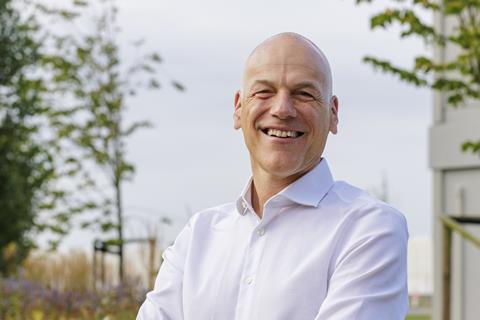
Jan Doldersum: I have been responsible for our retail and chain strategy. This is my 30th year at Rijk Zwaan and over the last three decades, Rijk Zwaan has developed a very clear retail strategy globally. It’s focused on interacting with retailers and trade to drive category growth in the retail business, and to also introduce new products and varieties. Across several different countries, we have local colleagues who are responsible for driving those relationships. They execute and implement our retail strategy. We will continue of course with this strategy.
But what we’ve also seen over the last several years is stagnation, or even a decline, in consumption of fruit and vegetables. And to change this requires more than talking to retail or direct trade customers. You really need to change consumer behaviour, and we’ve been thinking about this for quite a long time.
The decline in consumption affects the whole fresh produce sector. Consumption in value terms might be increasing by a few percentage points in some global markets, but consumption by volume is stable or declining. And that is very strange. Because you see the global health trends and you would expect the fresh produce sector to be benefitting. But then there are all the ultra-processed unhealthy snacks and foods, and of course health supplements. These alternatives are easy to consume, accessible, and sometimes cheaper. Rijk Zwaan gained deeper insights to these barriers to consume fruit and vegetables, and we decided we should step up as breeding company and claim thought leadership in this domain. By influencing consumer choices, we can positively contribute to healthier, more sustainable diets leading to a healthier society and more sustainable planet.
So how does this consumer-focused strategy look? How will it be implemented?
JD: We are sure we cannot do this alone. We need to build partnerships with our direct customers as well as partners in the value chain and stakeholders in the wider ecosystem.This ecosystem consists first and foremost of the network we already have as Rijk Zwaan – growers, growers’ associations, but also supermarkets, processing companies and the wider fresh produce industry. We want to expand it to include a whole range of stakeholders that we need to interact with to grow consumption, such as governments, advocacy, research, media, and care.
Let me give you some examples. In advocacy, we’re already connected with foundations and associations such as IFPA and Freshfel, but we should also increase our cooperation at that level. Care is a completely new sector for us, but I see major opportunities for growth here. On the one hand, there’s health prevention – doctors and nutritionists, but also elderly care. And obviously, we also see opportunities to work with schools and kindergartens. The ecosystem we’ve mapped out will look different in each country. We need to reach the key decision-makers and influencers who can help us increase consumption.

Can you give us some examples of what Rijk Zwaan is already doing to increase fruit and vegetable consumption?
JD: We are working together with the Wageningen University and the food education platform. It’s a Dutch initiative to educate children in primary schools on taste and on eating fruit and vegetables. It includes cooking classes in lessons. It literally starts with having veggies first with your ‘firstborns’, young children. Here you can create the biggest impact in terms of changing consumption behaviour.
Another example is a programme providing children with what we call a seed kit, an educational kit on how to grow your own veggies. Most schools in the Netherlands have their own home garden or educational home gardening. We provide almost 4,000 of these packages to primary schools to educate children on growing your own veggies, and this has proven to be very successful. We’re now thinking about how we can scale that up to other countries.
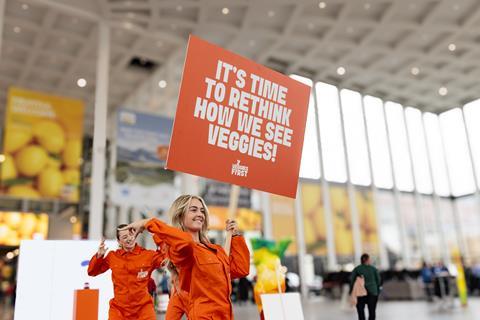
And lastly our consumer platform Veggies First, which we have recently rebranded. Veggies First is there to make veggies the main event. We’re on a mission to put veggies front and centre, at home, in stores, in restaurants, and beyond. Expect bold moves and inspiring ways to bring more vegetables into everyday life.
What kind of investment is Rijk Zwaan putting into its consumer-focused strategy?
JD: We take this ambition seriously and therefore invest budget, tools and research. Most important is capacity to get people enthusiastic about the concept. Together with my colleagues, we are engaging with our customers and societal partners. It’s literally planting the seeds and raising funding together with partners. Once our plans are further developed, we plan to investigate potential European and national government grant opportunities in collaboration with other partners. Until now, healthcare, nutrition and education have not been actively involved in our mission to increase fruit and vegetable consumption.
In the Netherlands, annual healthcare spending amounts to approximately €120bn, yet only around 1 per cent is invested in prevention. While prevention requires a long-term perspective, we believe it is essential to strengthen the dialogue with policymakers and shift more attention, resources, and investment towards preventing disease rather than treating it.
A related concern is the growing impact of obesity. According to the Dutch National Institute for Public Health and the Environment (RIVM), obesity-related healthcare costs are estimated at €25bn in 2025, compared to just €1bn in the 1990s. This trend highlights the urgency of promoting healthier lifestyles and strengthening collaboration with healthcare stakeholders to drive meaningful change.

Talking more ‘Asia specific’, Rijk Zwaan recently hosted a seminar on boosting fruit and vegetable consumption in Asia at Asiafruit Knowledge Centre – Asia Fruit Logistica’s content hub. What was the purpose of the seminar?
JD: Yes, on day two of Asia Fruit Logistica (3 September), Rijk Zwaan hosted a one-hour moderated session at Asiafruit Knowledge Centre. We shared some data and insights on a consumption level, because we were curious to see what the situation is in different Asian countries in terms of consumption of fruit and vegetables. Besides the data sharing, we also facilitated a discussion with some key industry stakeholders: Frank Kang, Korea general manager for Del Monte Corporation; IFPA’s Miriam Wolk; Peter Zhu from Pagoda in China; Sumit Saran from SS Associates in India; and Tracey Lam from AquaGreen in Hong Kong. We talked to these opinion leaders to find out what they saw as the key barriers to growing consumption, and what the best practices are for overcoming these. The discussion was very illuminating and highlighted some exciting opportunities for growth.