The CGA has welcomed the president’s state of the nation commitment to transforming the country’s logistics infrastructure
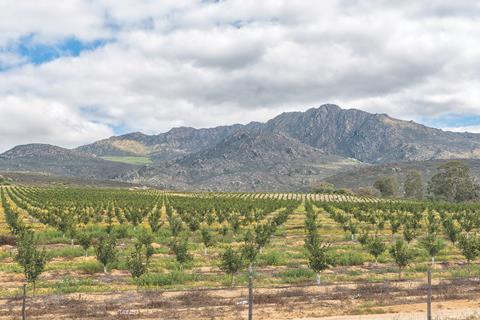
The South African Citrus Growers Association (CGA) has said that a commitment to expanding public-private partnerships in logistics stands among the most promising developments for the industry in this year’s state of the nation (SONA) address.
Delivered last week, the country’s president, Cyril Ramaphosa, highlighted the industry’s position as the world’s second-largest citrus exporter.
“This will warm the hearts of many in the citrus industry,” the CGA commented.
Dr Boitshoko Ntshabele, chief executive of the CGA, said that of even more importance is the renewed commitment to transforming a logistics environment that will “define the future”.
“Citrus production continues to grow steadily,” he said. ”Yet growth alone cannot secure long-term prosperity.
”Only when growth is paired with market access and efficient logistics, can it turn record harvests into economic betterment for all.”
Things are in motion when it comes to market access, Ntshabele noted.
“There is an early framework deal with China and negotiations with the US on a mutually beneficial trade deal is continuing.
“On the logistics front, the SONA was especially meaningful,” he explained.
“The president’s pledge to ‘turn around the performance of our rail system and ports’ is significant.
”His commitment to expanding public-private partnerships in logistics stands among the most promising developments for our industry,” Ntshabele outlined.
The comments will be welcomed across the fruit export industries, where table grape, stonefruit and apple and pear exporters have so far this season suffered major losses due to delays in the port of Cape Town.
The citrus season only really gets underway in April, and from April to June many industries, including avocados, will be very dependent on smooth logistics systems.
Ntshabele said the citrus industry is already seeing the shift taking shape.
“The partnership between Transnet and ICTSI at Durban’s Container Terminal Pier 2 – which handles the bulk of South Africa’s citrus exports – is set to bring renewed operational discipline and stability,” he said, noting further that the CGA remains convinced that more private-sector partnerships are the answer.
“Progress on rail, although modest, is measurable,” Ntshabele pointed out. ”While far from a turnaround, limited increase in rail shipments in the past season signalled momentum.
”Historically, rail carried most of the citrus crop. Today it transports around 5 per cent. Yet rail remains substantially more cost-effective and up to four times more fuel-efficient than road transport.”
Although mining has traditionally dominated rail planning and investment decisions, citrus represents one of South Africa’s most ”compelling growth opportunities” in the logistics landscape.
“Last season, the industry exported more than 203mn 15kg cartons,” he added. ”By 2032, we have the potential to reach 260mn.”