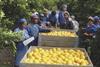
South Africa was the world’s largest citrus exporter by volume in 2025, but celebrations are likely to be short-lived given the realities facing the sector

One can forgive South Africa’s citrus producers for having an extra spring in their step since the country became the biggest exporter of citrus fruit in the world last season, marginally beating Spain for the honour with shipments of 2.9mn tonnes.
While even the citrus industry acknowledges that this was achieved under conditions which may prove to be short-lived, it nevertheless shows the tremendous progress the country has made during the past few years as a major world citrus supplier.
“These figures should be seen alongside recent seasons of tighter export fruit available from Spain, as producers there have navigated increasingly complex climatic and production conditions,” the South African Citrus Growers’ Association (CGA) said.
“These shifts underline how finely balanced global citrus supply has become, rather than signalling any structural change in Europe’s importance to the category. Northern Hemisphere supply is expected to return to higher volumes when seasonal weather conditions are more conducive to fruit production.”
The 2025 statistics relate specifically to exports. South Africa is not the world’s largest citrus producer, as countries such as China, Brazil, and Spain produce higher quantities that largely serve their domestic markets. “South Africa’s position reflects its export-oriented model, its strong compliance with international plant health and sustainability standards, its high fruit quality and long-standing integration into global supply chains,” CGA said.
It points out that South Africa and Spain play highly complementary roles in the citrus value chain. Spain anchors supply during the Northern Hemisphere season, while South Africa provides continuity during the Northern Hemisphere summer months.
“This seasonal coordination ensures that Northern Hemisphere consumers have consistent access to world-class citrus throughout the year, supporting category stability, shelf presence, and long-term consumption,” explained CEO Dr Boitshoko Ntshabele. “Volume is just one single measure with which to assess an industry.”
He noted that South African growers continue to face challenges. “Currently the impact of the situation in the Middle East on fuel costs and shipping routes is a concern which is placing significant pressure on grower margins. Growers also face unpredictable price and market dynamics, rising input costs, as well as market access issues such as high tariffs and unscientific plant health measures,” he said.
Then there is the recent flood damage in the Eastern and Western Cape which will have an impact on this year’s shipments.
According to Ntshabele, “while South Africa’s citrus performance has been driven by sustained investment in orchards and production techniques, production growth underscores the need for more decisive government action on market access, to ensure that increasing volumes can reach existing markets such as the European Union, US, India, and China profitably, efficiently and at lower cost. The CGA’s Vision 260 reflects the industry’s focus on long-term grower sustainability and unlocking the potential to export 260mn cartons by 2032”.