Volumes tell only half the story in what was probably the toughest South African citrus season of recent times
After what was described as a highly unprofitable season, the South African Citrus Growers’ Association (CGA) has said that decisive action is needed by the industry in order to avoid a repeat in future.
“Volumes only tell one part of the story,” explained Dr Boitshoko Ntshabele, chief executive of the CGA.
”This has been a very tough season. Nearly every risk factor facing our industry materialised, including a war in one of our biggest markets, the Middle East.
“Growers in most production areas achieved excellent yields on farm, but the conditions under which the fruit was exported tested every link in the chain,” he outlined.
”We must take every lesson offered by this highly unprofitable season and act decisively as an industry in order to avoid a repeat in future.
”Our growers and the approximately 160,000 farm-level jobs they protect simply cannot afford it,” Ntshabele warned.
He named limited access to shipping capacity into the Middle East and a shortage of containers for all markets as some of the key factors affecting the campaign, as well as sharply increased shipping and farm-level input costs and the “punishing” price of diesel.
There was also a marked downturn in overseas consumer spending power, especially in the middle-class market, which forms the core of the citrus demographic.
Flooding across the Western and Eastern Cape, with some orchards destroyed, and higher rainfall, which produced a larger proportion of big fruit just as the market demanded smaller sizes, also played a role.
Rain-related quality issues in some regions came from growers having fewer crop protection tools to fight decay, as many treatments have been phased out globally under regulatory pressure.
Ntshabele said a narrowed supply window into Europe, mainly caused by a large, long-lasting Egyptian orange crop which often competed on price rather than quality, affected South Africa.
“Logistics backlogs, particularly at the Port of Durban, resulting in disrupted shipping and ultimately missed market supply windows,” he continued. “Finally, a relatively strong rand, diminished returns for growers.”
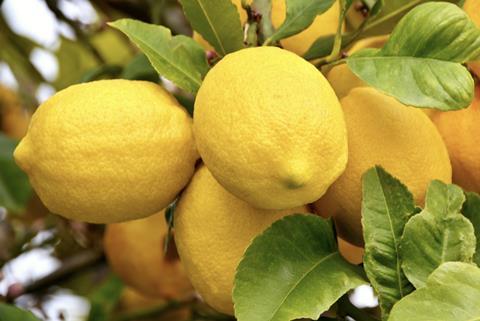
In terms of production, lemons reached 51mn cartons, 23 per cent more than in 2025 and 11 per cent above the original estimate.
“It was the only variety that saw an increase in export volumes this year,” Ntshabele noted.
The country exported 50.7mn cartons of mandarins, 5 per cent below 2025 and 4 per cent below the original estimate.
Valencia oranges reached 58.8mn cartons, 5 per cent down on 2025 and 7 per cent under the estimate, while Navel oranges hit 25.2mn cartons, 20 per cent below the previous year and 16 per cent under the estimate.
“In some areas, heavy rain affected the quality and taste profile of early and mid-season fruit,” he said.
Finally, grapefruit remained at the same export level as 2025 at 13.5mn cartons, although this was 14 per cent below the April estimate.
Processing-grade volumes shipped predominantly to China rose substantially.
While South African citrus production remains on the increase, this season’s difficulties arose from a wide-ranging combination of pressures.
“In the medium term most concerns remain, especially regarding the Middle East, but in the longer term the industry’s fundamentals have not changed,” said Gerrit van der Merwe, chairman of the CGA.
“It remains well positioned to keep supplying high-quality fruit to the Northern Hemisphere during its summer months.”
“We acknowledge the hardship growers have faced this season, and we remain committed to supporting them,” added Ntshabele.
”Now is the time to take stock, stand together, and chart a clear path to safeguarding the future of South Africa’s citrus.”