The Serbian blueberry cooperative is proving that regenerative practices that prioritise soil health and biodiversity can deliver premium quality and market access
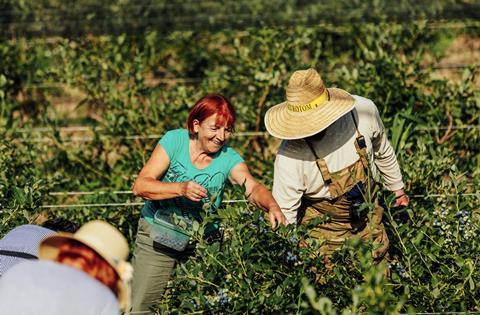
Founded in 2020 by passionate blueberry growers in western Serbia’s Takovo region, Takovo Berry has emerged as a trailblazer in regenerative fruit production. The cooperative, which manages approximately 50ha of highbush blueberry cultivation, has successfully positioned itself among Europe’s most demanding buyers by implementing regenerative practices that prioritise soil health, biodiversity and premium fruit quality.
“We view soil as a living organism, and what we’re working to improve – to regenerate – is precisely the life and health of that soil,” explains Mileta Culjkovic, co-founder of Takovo Berry. This philosophy underpins every aspect of the company’s production system, from pre-planting soil preparation through post-harvest management.
Predominantly located in the mountainous microclimate of western Serbia at elevations around 500 metres, Takovo Berry’s cultivation sites benefit from volcanic-origin soils and abundant water sources. But the cooperative doesn’t rely solely on natural advantages. Its regenerative system focuses on restoring soil balance in three critical areas: microbiology, chemistry and physics.
“In modern agriculture, soil health and balance have been significantly disrupted,” Culjkovic notes. “Through regenerative principles, we’re returning soil to balance, strengthening plant immunity, reducing the use of synthetic fertilisers and pesticides, while creating nutritionally rich and safe food.”
Central to its approach is understanding the specific microbial preferences of blueberries. Unlike brassicas, which thrive in bacterially-dominant environments, blueberries prefer fungal-dominated conditions in their rhizosphere. The cooperative actively cultivates and regenerates this targeted microbiome through specialised techniques.
Regenerative techniques
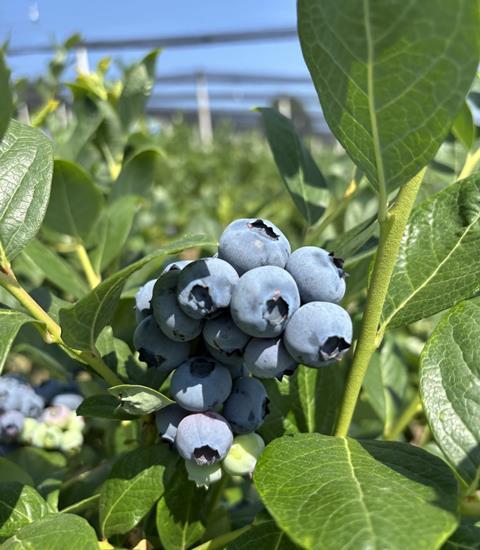
One cornerstone method is the Regenerative Soil Primer, applied during autumn when conditions are optimal for fungal development. This technique involves introducing various types of complex carbohydrates and biologically available minerals that boost the abundance and activity of targeted microorganisms. These microbes then perform humification and mineralisation processes throughout autumn and winter, ensuring plants receive abundant energy and nutrients in their most bioavailable form – through microbial metabolites – in the following season.
The cooperative also employs winter cover crops in the immediate root zone area, recognising that photosynthesis itself is one of the best contributors to soil health. It strives to keep soil covered year-round, either with living green cover crops or various types of mulch, including wood chips, sawdust and straw.
For their predominantly heavy clay-loam soils, Takovo Berry applies specialised agronomic techniques, including subsoiling and aeration using purpose-built tools and machinery to maintain proper soil structure.
What distinguishes Takovo Berry from conventional operations is its commitment to data-driven regenerative management. Rather than following standardised fertilisation and protection programmes, the cooperative conducts detailed analyses to identify primary cultivation parameters requiring attention.
Its diagnostic toolkit includes comprehensive soil analysis covering basic characteristics, mechanics, carbon-to-nitrogen ratios and cation exchange capacity, which measures a soil’s ability to hold positively charged ions. It also performs microbiological analysis using Dr Elaine Ingham’s Soil Food Web methodology, measuring fungal and bacterial biomass, their ratios, predators, and both beneficial and harmful nematodes.
Perhaps most notably, the cooperative conducts plant sap analysis analogous to a blood test for humans, which reveals the plant’s current nutritional status. This enables precise application of only deficient nutrients, avoiding the surpluses that cause many problems in modern agriculture. Water analysis completes this diagnostic approach, crucial for both soil and container cultivation.
“We don’t have an identical programme for all plantations,” says Culjkovic. “Based on detailed analyses, we adapt the programme to each planting separately.” This tailored approach recognises that regenerating soil and restoring balance is a process that takes time, sometimes one season just to implement the approach, with complete soil life restoration requiring three to five years.
Market recognition
The regenerative approach has delivered tangible market advantages. Takovo Berry has positioned itself with some of Europe’s most demanding buyers and secured the ability to negotiate better prices. The sorting data tells the story: across its entire export volume, sort-out rates range from just 2-4 per cent depending on the year, with several trucks per season achieving zero rejects.
“These minimal rejects are what determine the final price to our producers, and this is what Takovo Berry cooperative is recognised for among Serbian producers,” says Culjkovic.
Buyers have commented that fruit from Takovo Berry can be shipped to the other side of the world, while conventionally grown fruit from other sources must be sold quickly on local markets. This exceptional shelf life, combined with superior organoleptic properties, appearance, berry size, and taste, has opened doors to premium European retail chains.
The cooperative’s primary buyers serve demanding markets and premium chains throughout Europe, predominantly in the Baltic countries, Sweden, Finland, Norway and premium German retailers. Significant volumes also reach the Polish market, where demand continues growing annually.
Takovo Berry holds group GlobalGAP certification along with social standards Grasp and Sedex Smeta. While it considered certification for “zero residue” standards and completed training, the cooperative found that this designation isn’t widely recognised outside Italy.
However, the market increasingly demands fewer active substances on fruit. Some chains require no more than five active materials, others limit it to three, while some focus only on whether treatments use approved substances within prescribed limits.
“The market doesn’t recognise zero residue or regenerative blueberries as such, but it certainly recognises the benefits this approach provides,” explains Culjkovic. “First and foremost, the persistence of the fruit – the so-called shelf life – which is most important to serious buyers.”
Economic and environmental returns
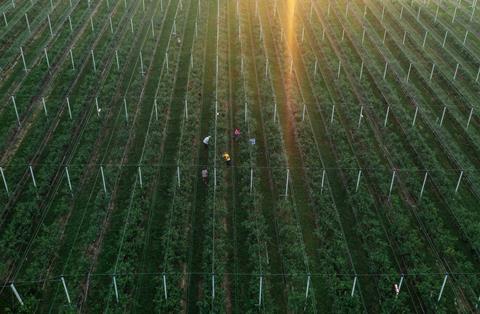
The economic case for regenerative production is compelling. Through precise nutrition, which the cooperative considers half of plant protection, some plantations have reduced fertilisation costs by up to 50 percent within a few seasons. This represents drastic savings compared to conventional approaches that constantly address consequences rather than root causes.
Production risks are minimised through balanced nutrition and robust microbiology that strengthens plant immunity, making plants naturally resistant to insects and diseases. Yields in regenerative plantations range from 10 to 12 tonnes depending on cultivation technology, but more importantly these yields don’t decline over time and maintain consistency in both quantity and quality.
Current plantations include 70 per cent in-ground cultivation (raised beds) and 30 per cent container production. Quality control at reception shows impressive metrics: firmness averages above 240 (measured by durometer), Brix levels averaged 13 in the latest season, and detailed assessment of green, soft or damaged berries ensures only export-quality fruit reaches premium buyers.
As a closed-circle producer cooperative, Takovo Berry exports only blueberries under their production control, minimising risk and ensuring it knows exactly what the quality is before the fruit arrives at the cold storage facility. The cooperative continuously invests in knowledge and its application to enable premium quality products.
“For us, the next season begins immediately after harvest,” says Culjkovic. “Everything we do in the plantations after harvest has an immeasurable impact on the quality and yield of the next season.”
Harvest standards at the cooperative are rigorous: fruit is touched only once, reaches the cold chain within one hour of picking, each plantation has its own mini-cold storage for gradual temperature reduction, and cold transport delivers to the central collection point the same evening without breaking the cold chain. During harvest, the cooperative’s agronomists conduct quality control in member plantations, ensuring consistency and adherence to instructions.
Looking forward, Takovo Berry continues refining its regenerative system while hoping that Europe will soon recognise and define products produced through this approach, and that consumers will become better informed about the benefits through promotion. Its success demonstrates that regenerative agriculture isn’t just environmentally responsible – it’s a viable path to premium market positioning and economic sustainability in fruit production.