DP World highlights increasing instability in supply chains, as 93 per cent of companies report impact of climate shocks in last three years
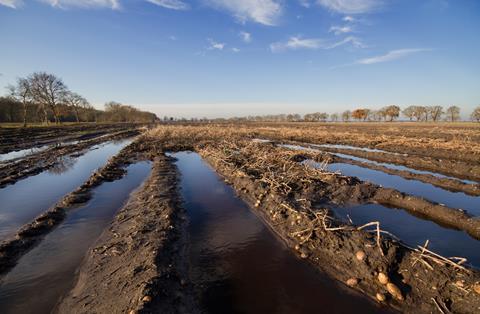
In the past three years, 93 per cent of companies in perishable supply chains reported climate-related disruption, according to a survey of hundreds of senior logistics professionals by DP World, with nearly half hit six or more times over the period.
“Climate volatility is reshaping how food moves across borders,” said Alfred Whitman, global vice president - perishables and agriculture at DP World. “The sector is feeling the pressure more often and with less warning. Traditional supply routes are being upended, forcing producers to build resilience in real time. What’s needed now is earlier insight into risks, more predictable movement across regions and stronger cold chain infrastructure.”
According to the report, entitled ‘Without Logistics: Perishables Edition’, climate extremes are exacerbating other supply chain pressures, with 93 per cent of companies reporting significant exposure to port congestion, 88 per cent reporting customs delays and 88 per cent citing technology failures – all of which serves to reduce shelf life and increase waste.
“Roughly one-third of all food produced globally is lost or wasted before it reaches consumers, equivalent to 1bn meals every day,” DP World stated. “As extreme weather intensifies, from floods to droughts that restrict major waterways, cold-chain networks are struggling to maintain product integrity and ensure reliable delivery.”
A typical logistics incident now costs US$400,000, according to DP World, contributing to more than US$7bn in annual losses across the perishables sector. Over half of companies lose up to a month of productivity in a disrupted year, while a third take over a month to recover from major events.
Beat Simon, chief operating officer - logistics at DP World, commented: “Across the industry, we’re seeing disruption escalate to senior leadership because the underlying systems were never designed for this level of instability. Our research makes clear there’s a widening gap between perceived resilience and actual performance. Closing that gap will define how well global food supply chains function in the decade ahead.”
The company said that the findings pointed to an urgent need for coordinated investment in cold chain infrastructure, predictive visibility tools and integrated logistics solutions.
“DP World is already investing in advanced cold-chain logistics, digital visibility platforms and multimodal connectivity,” it said, “enabling cargo owners to respond faster and keep food moving even amid climate shocks.”