Southern Sinaloa faces a 50 per cent drop in its harvest, with producers warning of significant job losses
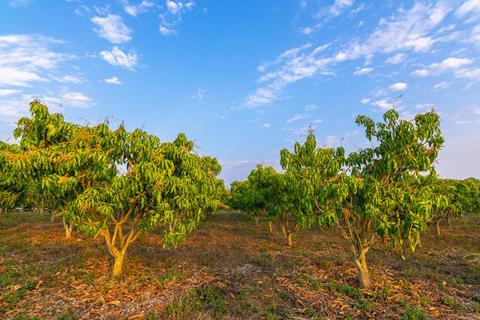
An unseasonably warm December and January could leave mango producers in southern Sinaloa facing a 50 per cent drop in production this year, jeopardising the livelihoods of around 10,000 farm workers.
Flowering has reportedly only reached between 30 and 35 per cent of expected levels in some parts of the state, while in others, it hasn’t happened at all. This means that income for the season – which normally runs from May to September – will be significantly lower than usual. Tommy Atkins, Heidi, and Kent are reported to be the most affected varieties. These are also the main export varieties.
The southern region of Sinaloa is home to 30,000ha of mango production, generating around 20,000 direct jobs. According to data from the Ministry of Agriculture and Rural Development, Sinaloa produced 475,324 tonnes of Mexico’s 2.237mn-tonne mango harvest in 2024, making it the main producing state. It was followed by Guerrero on 417,209 tonnes, Nayarit on 323,117 tonnes, Chiapas on 272,151 tonnes and Oaxaca on 213,960 tonnes.
Jaime Coronado, director of agricultural and horticultural development at the Sinaloa State Government’s Ministry of Agriculture, said the authorities are working on measures to help mitigate problems caused by climate change in the future. This includes new production technologies, controlled irrigation and the introduction of more heat-resistant varieties. But he warned that this would not solve the lack of employment or income in the coming months.
The climate challenges are not unique to Sinaloa – producers in Nayarit, Chiapas, and Guerrero face similar conditions.
Last year, southern Sinaloa produced 100,000 tonnes of mangoes. This was already a significant drop on the 200,000 tonnes produced in previous years.
There is little growers can do for now except for wait for fruit set, the moment when it is determined how many flowers will develop into mangoes. If fruit set is low, the production shortfall will be even greater than 50 per cent; if it is better than expected there is a possibility that losses will not be as high as expected.
For now, producers are calling on the authorities listen, act quickly, and begin working on medium-term solutions for one of the key drivers of the state’s economy.