
Netherlands-based group Smartkas outlines plan to launch new venture and investment vehicle after protracted legal battle
Just a few years ago, Dutch agtech company Smartkas was setting out plans to grow strawberries year-round at two indoor production centres – one in the Netherlands and one in the UK.
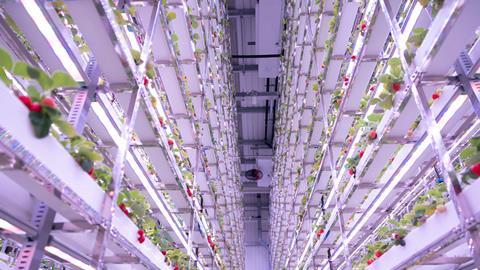
The latter involved a 12-layer vertical farm in Harlow, UK, with 27,000 sq m of growing space and a targeted annual output of 500 tonnes.
And by early 2023, production was underway. Smartkas had partnered with leading British supplier BerryWorld to grow Eve’s Delight strawberries at the site, while trials had also been carried out at its Dutch R&D facility.
But the Harlow operation and a second indoor strawberry farm in the Netherlands were eventually taken out of operation and largely dismantled.
A subsequent dispute over what went wrong led to a lengthy legal battle, one which reached an initial conclusion just a few months ago.
In a judgment issued on 24 June 2026, the Amsterdam District Court ruled that supplier VariPar Distribution, trading as Parus Europe, had breached its contract with Smartkas over production systems it delivered for the two farms.
The court dissolved the contract, rejected Parus’s claim for an outstanding payment of US$682,632.24, and ordered repayment of amounts Smartkas had already paid in relation to the two farms.
Parus has since appealed the ruling, and this week told Fruitnet it has new evidence that it said challenged the court’s findings.
Claims and counter-claims
While that appeal remains to be heard, the dispute serves to highlight the scale of technical challenges involved in developing and operating indoor farms for fresh berry production.
Two court-appointed experts concluded that defects in the farms’ water, ozone, UV disinfection and CO2 systems meant they could not function as intended for professional, year-round strawberry production.
They also concluded that remedying the problems would in practice require the installations to be redesigned and rebuilt. The court rejected Parus’ objections to the expert findings and allowed Smartkas’ claim for damages to proceed to a separate assessment procedure.
However, it rejected additional damages claims based on Smartkas’ contention that Parus had guaranteed production of 3kg of strawberries per plant each year, finding that no such guarantee existed.

Parus said it was appealing on the basis that, in its view, the court-appointed experts’ report contained methodological and technical flaws. It said new video footage and operational records demonstrated that the UK farm was operational and had supplied strawberries to major retailers.
In response, Smartkas disputed Parus’ interpretation of that evidence and said it did not demonstrate commercial-scale production. The company also rejected Parus’s criticism of the expert process. The District Court judgment remains enforceable pending the appeal.
The Parus case was not Smartkas’ only legal dispute around its vertical farm activities. As reported by Hort News in 2025, a court in The Hague apparently rejected Smartkas’ claims made in a separate case against equipment supplier Artechno Growsystems in relation to the Amsterdam project, and ordered Smartkas to pay around €400,000 in outstanding invoices, plus interest and legal costs.
Both parties came to a settlement agreement, and then in March 2026, Artechno Growsystems’ parent company Artechno Group was declared bankrupt.
Pastures new
Now, having won this latest first-instance court ruling, Smartkas founders David Meszaros and Wim Roosens have revealed that the company is entering ”a new chapter” by expanding into large-scale fruit import and export trading, drawing on operational and market knowledge developed over the past few years.
They also told Fruitnet they are building Hive Capital, a new investment vehicle focused on orchard businesses in Central and Eastern Europe.
According to the pair, Hive Capital will initially concentrate on Hungary and topfruit production, including apples.
And so it seems, whatever happens with regard to the appeal, their dream of building two futuristic, closed-loop strawberry farms has apparently come to an end.