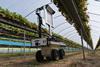
Robots’ cameras may be misjudging colour of soft fruit, thereby tricking automated systems designed to judge ripeness

Robots use cameras to assist with a range of jobs on UK berry farms

Robots use cameras to assist with a range of jobs on UK berry farms

As Wimbledon fever builds and strawberries hit centre court, scientists at the University of East Anglia (UEA) are helping make sure only the ripest berries are picked for supermarket shelves.

New research carried out in collaboration with agri-tech firm Antobot suggests the colour of strawberries captured by cameras widely used in agricultural robotics may not be as reliable as previously thought.

In fact, the rich red colour shoppers associate with a perfectly ripe fruit could sometimes be down to ‘camera tricks’ rather than nature itself.

Game, set and… mismatch?

The Wimbledon Championships famously serve tens of thousands of portions of strawberries each year, with consumers expecting berries that are uniformly bright, fresh and sweet.

Behind the scenes, growers are under pressure to deliver that consistency – often with the help of automation.

But researchers investigating how farm robots assess ripeness discovered that much of the colour variation seen in images of strawberries is not due to natural differences in the fruit, but rather is caused by the camera systems themselves.

Prof Graham Finlayson, from UEA’s School of Computing Sciences, said: “In the race to modernise agriculture, farmers are increasingly relying on technology to monitor plant health or predict crop yield.

“Cameras have taken on jobs once done by the human eye – for example they may be monitoring crop health, detecting disease, estimating yields, deciding when fruit is ready to harvest or determining what ends up on supermarket shelves.

“When it comes to agriculture, technology makes new things possible all the time. A robot can assess every single plant in a field, but it would be inconceivable for a human to count every strawberry on a farm.

“Colour plays a crucial role in these systems, particularly for fruits like strawberries, where ripeness is judged largely by colour.

“But real-world outdoor growing environments introduce constantly changing lighting conditions, while camera processing also alters how colours are recorded.

“We wanted to better understand whether these digital eyes can always be trusted.

“What we found was that cameras may be distorting the appearance of fruit, potentially misleading automated systems designed to judge ripeness.”

Strawberries under scrutiny

Scientists photographed strawberries in real field conditions while the strawberries were still hanging on the plant. Crucially, they tracked which berries were identified as truly ripe based on what experienced pickers chose to harvest.

This allowed the team to compare what the camera “saw” with reality.

Postgraduate researcher James Bennett, also from UEA’s School of Computing Sciences, said: “When we processed images using standard camera settings, the strawberries showed noticeable differences in colour – even when they were equally ripe.

“But after applying a simple calibration technique using a colour checker placed in each image, much of that variation disappeared.

“Uncorrected images showed ripe strawberries ranging from deep magenta to bright orange-red depending on lighting conditions, while calibrated images were far more consistent.”

This calibration technique reduced the variation in strawberry colour measurements by nearly half (48 per cent), showing that a significant portion of inconsistency comes from the imaging process rather than the fruit itself.

Marc Jones of Antobot concluded: “This research is an important step towards building more intelligent, more trusted and ultimately more productive autonomous farming systems.”

The research was funded by AgriFoRwArdS – the world’s first Engineering and Physical Sciences Research Council (EPSRC) Centre for Doctoral Training in Agri-Food Robotics.