Michael Barker reports on the latest efforts to market Picota cherries and celebrate the beauty of Spain’s Jerte Valley
After a long winter, there can be few more enchanting sights to warm the heart than cherry trees bursting into blossom. From Mount Yoshino to Washington, DC, visitors flock to experience the breathtaking beauty of the shades of pink and white and capture that all-important shot for social media.
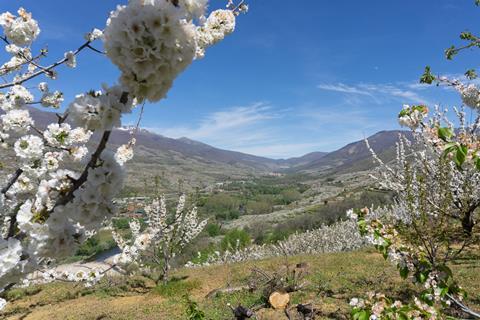
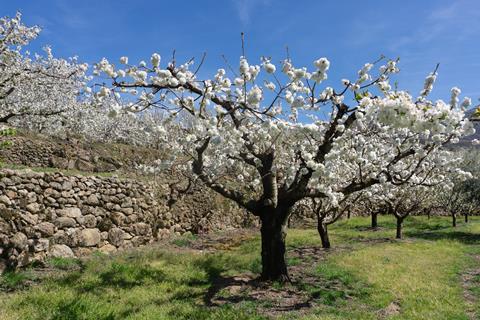
Spain’s Jerte Valley, home of the Picota cherry, has added its name to those most-anticipated of global blossoms, taking the event to the next level by organising a Cherry Blossom Festival that attracts thousands to the region every year. Anyone lucky enough to attend is greeted by the stunning sight of one and a half million cherry trees bursting into bloom and turning the landscape a sea of white.
Officially a Festival of National Tourist Interest, the event ran this year from 27 March until 11 April this year as part of the wider Spring and Cherry Blossom programme of festivities that continue through until early May. Kicking off in the municipality of Tornavacas and concluding in Casas del Castañar, the festival follows on from the whimsically named Awakening of the Valley and represents a jewel in the crown of the Jerte Valley’s annual calendar.
The programme features a wide-ranging series of activities and was devised as a strategy to bring tourism to the various villages of the valley. It includes a multitude of sports, arts, music and other cultural pastimes that showcase the region and the local way of life, while cherry blooming takes centre stage thanks to organised hikes through the mountains and cherry trees, visits to agricultural museums, art exhibitions and food tastings.
“It is so special because everyone in the valley works together to create and put on a unique festival, and its people celebrate the start of the cherry campaign,” explains Mónica Tierno Díaz, managing director of Agrupación de Cooperativas del Valle del Jerte, the trade group responsible for Spanish Picotas. “It also sees the start of good weather and longer days, which we really appreciate!”
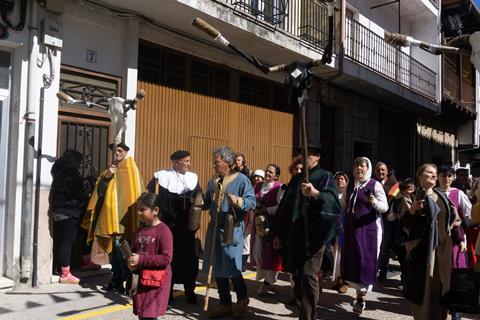
The opening day this year included the ceremonial Delivery of the Golden Cherries, featuring local children’s group Pelujines Folk. That was supported by a craft and gastronomy market, artistic creation workshop and an outdoor concert, among other special events. Subsequent days featured a wide range of activities steeped in the region’s heritage and encouraging visitors of all ages to take part.
Restaurants across the valley laid on special menus and offered tastings of typical regional cuisine. Sweet temptations included the likes of huesillos (fried doughy Easter treats) and torrijas (Spanish-style French toast), while savoury options included caldereta (thick slow-cooked stew) and migas (a traditional dish made of stale bread, chorizo and pancetta).
Tierno Díaz says the event’s importance is multifaceted. From an economic point of view, it offers a major boost to hotels, restaurants and the transport sector, but it also has a valuable social impact as a way of spotlighting the Jerte Valley’s way of life, underlining why it is worth preserving and contributing to the generational handover. “We must secure the future for upcoming generations, making it easy for them to live as farmers on our land,” she says.
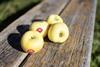
It also has the very valuable role of putting Picotas on a pedestal for a wide cross-section of current and potential consumers. Picotas are considered unique, not just in the cherry category but as a fruit in their own right – claiming to be sweeter, crunchier and with a longer shelf life than other varieties, they have garnered their own loyal following. For Tierno Díaz, their story is also about much more than the product itself and encompasses everything from sustainable on-farm practices to the natural landscape, culture, history and artisanal method of production.
Many categories of fresh produce are focused on continual volume growth, but that’s not the goal for Picota producers, it seems. Instead, the association is prioritising taking good care of what it has rather than planting more at all costs, making sure the trees are healthy and that growers are pursuing nature-friendly farming practices. There is huge pride in having Protected Designation of Origin (PDO) status and ensuring that the fruit is lovingly produced to that standard is always the top priority, according to the Picota trade group.
The weeks ahead are tantalisingly poised, with the Picota season typically running from June until early August. “This season is looking amazing,” says Tierno Díaz. “We’ve had perfect weather so far, beautiful blooming and great winter conditions, so we are expecting a high volume of cherries this year.”
“The UK is our most important market for Picotas,” Tierno Díaz concludes. “Once you try them, you can’t possibly choose a different cherry, and the UK consumer is clever. It’s a great fruit with a great price.”