Foundation research finds ‘downward spiral’ of climate and cost pressures pushing growers and farmers to breaking point
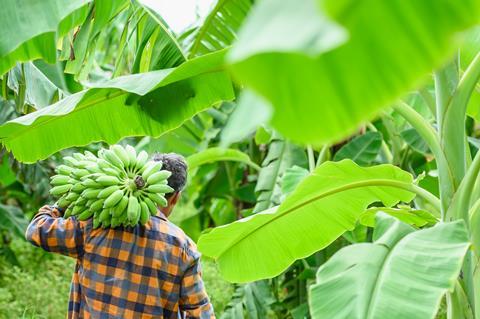
The Fairtrade Foundation has called on the UK government for a new Human Rights and Environmental Due Diligence (HREDD) law to tackle Unfair Trading Practices (UTPs) in the global banana industry.
The calls come as new research has found growers are left to shoulder the combined pressures of UTPs and a worsening climate crisis, putting their livelihoods and the future of bananas at risk.
‘Super El Niño’ to exacerbate spiral
The foundation has warned that the anticipated ‘Super El Niño’, expected to take hold though late 2026 into 2027, could place further pressure on production and supplies.
New analysis of the 2023-24 weather phenomenon found banana productivity fell by 22 per cent in Ecuador, 13 per cent in the Dominican Republic and 6 per cent in Peru, all major exporting countries.
The foundation also warned of the spread of diseases such as black sigatoka and Tropical Race 4 as a result of climate change, as well as the shrinkage of suitable land for banana cultivation.
Eleanor Harrison, CEO of the Fairtrade Foundation, said: “The people growing our bananas are facing extreme climate shocks which are predicted to be further exacerbated by the current Super El Niño, rising production costs and persistent unfair trading practices, leaving many unable to earn enough to sustain their farms.”
Farmers and workers have been described as caught in a “downward spiral”, as mounting pressures undermine their capacity to withstand climate shocks, which in turn exacerbate their financial hardship.
As a result, farmers may have less money to invest in measures needed to withstand climate change such as irrigation and disease prevention, the foundation said.
‘Pushing risk down supply chain’
While between 10 and 12mn people worldwide rely on bananas for their livelihood, the foundation said prices paid to growers may not cover growing production costs or provide a decent living.
Analysis carried out by independent advisors 3Keel found that persistent downward pressure on prices, late payments, last-minute cancellations and unfair penalties are “pushing risk down the supply chain”.
Unpredictable payments and orders are likely to make it harder to pay bills, feed families and avoid debt, while squeezed plantation margins may lead to cuts in wages, jobs and safety equipment.
Ever Antonio Flores Muños, a banana worker at banana production company Agrosiete in Colombia, said: “Over the past 10 years, the climate has changed a lot. It’s been getting much hotter […] it’s really intense.
“Some places have had losses due to the climate, flooding, strong winds. It’s going to affect all of us - our workers, colleagues - everything will be at great risk, and our wages will decrease,” he added.
Consumers appear willing to spend more
With around 93 per cent of bananas imported to the UK from climate-vulnerable regions such as Latin America and West Africa, the foundation cited growing concerns around the future of UK banana supplies.
UK consumers can also purchase bananas for as little as 15p each and supermarket prices have remained unchanged for almost 40 years, despite surging costs for fertiliser, fuel and labour, the foundation pointed out.
This is despite 67 per cent of British adults saying they’d be willing to pay a few pence more per banana if it helped farmers protect future supplies from climate change and disease, according to research commissioned by Fairtrade and conducted by Kantar.
The foundation added that “change is urgently needed”.
Calls to action
The Fairtrade All-Party Parliamentary Group (APPG), a cross-party group in the UK parliament, has launched an inquiry into purchasing practices in the banana sector.
Harrison urged that fair prices, climate resilience and decent work should go “hand in hand” and that introducing a new responsible business law could hold companies accountable for what happens in their supply chains.
“The UK’s banana supply depends on the people growing our bananas having the resources they need to adapt to climate change, and to invest in their future.
“Businesses should always play their part by paying fairer prices and building long-term partnerships that give the people growing our bananas the certainty they need to thrive,” she continued.
A report from think tank and democratic socialist organisation Fabian Society estimated that the annual cost of inaction on labour exploitation and environmental damage could reach £4.4bn in the UK, compared with an estimated £0.4bn per year for compliance and enforcement measures.
Seven of the UK’s largest supermarkets have also backed calls for new legislation to hold businesses accountable for human rights abuses and environmental harm.
Sainsbury’s, Waitrose and Co-op have sold 100 per cent Fairtrade bananas since 2007, 2010 and 2012 respectively.