Callout for industry feedback on new proposals aiming to strengthen food safety, make requirement clearer and reduce duplication
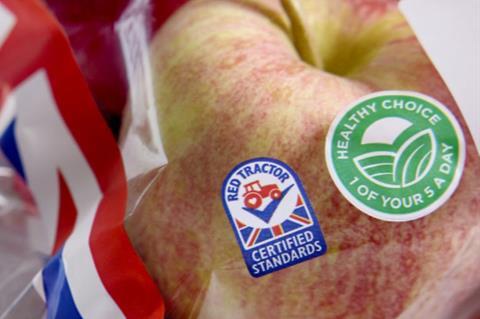
Growers and industry stakeholders have been invited to review the proposed changes to Red Tractor’s Fresh Produce Standards.
The consultation period runs from 10 November to 22 December 2026, with revised standards to be confirmed following consideration of feedback.
The proposals aim to strengthen food safety controls for higher risk crops, make requirements clearer and reduce duplication.
Key proposals include extending relevant controls from the existing leafy salads add on into core standards for applicable higher-risk crops.
These include field and irrigation water risk assessments, manure management, pre-harvest checks and product handling, microbiological swabbing in packhouses and measures to prevent contamination from condensation in cold stores.
Growers have been encouraged to review the proposals affecting their crops and consider whether they would be practical and proportionate for their businesses.
Veryan Bliss, chair of Red Tractor’s Fresh Produce Sector Board, says the review recognises the range of crops and production systems covered by the scheme.
“There are significant differences between crops, so we’ve had growers and representatives from across the supply chain looking closely at every requirement.
“The aim is to make sure we’re asking the right things of growers, with standards that protect food safety and reflect the different risks across crops,” she said.
Growers of lower risk crops, such as potatoes, would not be expected to meet every additional food safety control designed for higher risk produce.
Separately, where existing requirements are consolidated to reduce duplication, growers would still need to meet those obligations, but they would no longer be repeated across different sections of the standards.
The proposals also aim to retain requirements supporting GLOBALG.A.P and SAI Platform benchmarking, which certify farm-level food safety and sustainability standards.
“We know the burden of assessments is a real concern for growers, especially when requirements are repeated, but this isn’t about reducing standards for the sake of it,” Bliss added.
“If a control matters for food safety and gives customers confidence in British produce, it needs to stay. We want to hear from growers, agronomists, advisers, assessors and businesses across the supply chain.
“If something won’t work for your crop or business, tell us why. If there’s a more practical way to demonstrate compliance, give us an example. That’s the kind of feedback we need to get the final standards right,” she added.