EvokeAG’s largest iteration draws in visitors, tech start-ups, and speakers from across Australia and the world
More than 1,500 delegates from 18 countries descended on Melbourne for evokeAG on 17-18 February to explore the future of food and farming.
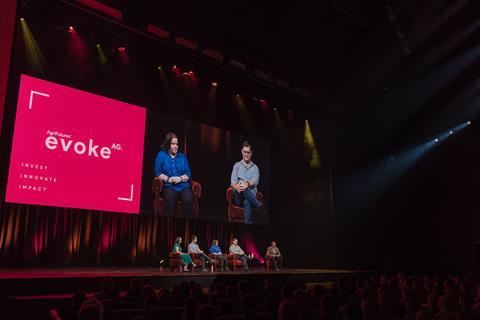
First held in Melbourne in 2019, evokeAG. returned in 2026 with its biggest programme yet, featuring more than 50 start-ups and scale-ups and over 100 speakers from across the agricultural industry.
EvokeAG provided a forum for conversations and collaboration around scalable, sustainable innovation to tackle mounting climate, geopolitical and food security pressures.
bringing these founders, farmers, investors, researchers and business leaders together, evokeAG. continues to stand out as a global meeting place for agrifood innovation.
Guided by the theme of Invest. Innovate. Impact, the event brought together founders, farmers, investors, researchers and business leaders and showcased how bold ideas were being transformed into practical, real-world solutions that deliver measurable impact.
Speakers included Julie Collins, federal minister for agriculture, fisheries and forestry; Mark Allison, CEO and managing director of Elders; Andrew Bate, Founder and CEO of leading agricultural robotics company SwarmFarm; Hamish McIntyre, president of the National Farmers’ Federation, and Liam Leneghan, founder and managing director of GoFarm.
This year’s conversations centred on three core programme threads of innovation and future technology, systems and policy, and environment and sustainability. Day one opened with a forward-looking panel examining the bold steps Australia must take to lead, rather than be left behind, in the emerging AI-driven industrial revolution.
An address from Collins reinforced the importance of innovation, resilience and sustainability in securing Australia’s agricultural future. She revealed in her morning address that the federal government would continue to back innovation in agriculture, through a A$450,000mn funding boost to support evokeAG. over the next three years, as part of the federal government’s A$23.8mn Showcasing Australian Agriculture – Regional Trade Events programme.
Mark Allison delivered his final evokeAG address as Elders managing director and CEO, and emphasised the importance of investing in agricultural productivity.
“If we continue to invest in partnerships, people, innovation, research, and in translating all of these factors into real world application, the decade ahead can be one of the most prosperous and productive in Australian agriculture’s history,” Allison said.
Andrew Bate challenged the sector to rethink how success is defined in agritech, arguing that real impact is measured by adoption on the ground.
“We didn’t choose to be unconventional, our conditions forced us. The real test of any agrifood technology is simple: do farmers buy it, and does it work for them?” he asked.
Jen Taylor, executive director of Future Industries at CSIRO highlighted the need to better bridge the gap between research and commercialisation.
“It’s important for scientists to understand industry needs, but we can’t expect them to understand entrepreneurs,” said Taylor.
More than 30 start-ups were showcased in Startup Alley today, alongside ten scale-ups at Scaleup Station and a further ten international companies participating in the Landing Pad programme as they prepare to enter the Australian market.
Day two of evokeAG. built on the momentum, turning the spotlight to the transformative impact of virtual fencing technology, the role of agtech in responding to extreme weather, the shifting global agrifood investment landscape and more.
Sessions also examined how agriculture can remain competitive amid geopolitical uncertainty and included a live demonstration from ag-tech startup Ornata showcasing cutting-edge remote, autonomous farming technology in action.