Ripeness scanner developed by Dutch agri-tech company OneThird uses near-infrared (NIR) spectroscopy to rapidly and non-destructively assess avocado firmness
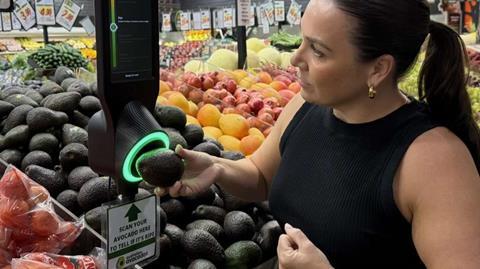
The Australian avocado industry has launched an Australian-first trial of a retail ripeness scanner to support domestic demand growth by addressing top frustrations for growers, consumers and retailers. The Avocado Retail Ripeness Scanner helps confidently choose avocados at their desired ripeness stage and reduce consumer-induced bruising.
Bruising in avocados is a shared frustration of growers, retailers and consumers alike. Industry research confirms that most avocado bruising is caused by consumers’ squeezing. Further, 47 per cent of consumers are squeezing three or more avocados before purchasing.
Supported through the Monitoring Avocado Supply Chain Quality project, the trial is evaluating the potential of a retail ripeness scanner developed by Dutch agri-tech company OneThird to address key industry challenges. The consumer-facing device uses near-infrared (NIR) spectroscopy to rapidly and non-destructively assess avocado firmness, providing customisable guidance on when the fruit will be ready to eat and helping consumers who are less confident in assessing ripeness themselves.
This Australian-first, small-scale trial reflects the Australian avocado industry’s ongoing investment in improving fruit quality and enhancing the retail experience for consumers and could solve some of the industry’s biggest pain points for both consumers and retailers.
Industry insights show around 75 per cent of consumers are looking for avocados that will be ready to eat within the next two days. The scanner, which features a customisable ripeness scale, reduces the uncertainty by allowing consumers to scan any avocado in-store and receive guidance on when it is likely to be ready to eat and corresponding storage recommendations.
Avocados Australia CEO John Tyas said the trial reflects the industry’s focus on solving practical challenges faced by consumers, to drive domestic consumption.
“Finding an avocado at the right stage of ripeness is a key frustration of consumers,” Tyas said.
“If we can help consumers select avocados with greater confidence, we support better eating experiences, reduce bruising and further strengthen trust in Australian avocados.”
In addition to supporting consumers, the technology provides retailers with a tool to attract more customers into store and valuable analytics that can help monitor firmness profiles on-shelf, reduce store waste, improve merchandising strategies and correlate ripeness with sales.
Early trial results show the retail ripeness scanner is being used on approximately 45 per cent of avocado fruit sold in-store each week. The associated analytics platform also provides insights into peak shopping periods and ripeness on display, which support fresh produce managers in objectively measuring and improving stock management and ensuring a consistent display of ripe avocados.
“The Australian avocado industry invests significantly each year in research and innovation to improve quality and make it easier for consumers to enjoy avocados with confidence,” Tyas said.
“Trials like this allow us to explore how technology can support growers, retailers and consumers alike.”
Ahead of deployment in Australia, more than 500 Hass avocados from different growing regions were assessed in the laboratory, demonstrating the device’s ability to consistently classify fruit into distinct ripeness categories suitable to the Australian market.
The OneThird technology has also been trialled internationally across Europe, including at retailers such as Kaufland and Tesco, as well as in retail outlets in Thailand.
The Australian trial will evaluate consumer engagement, operational practicality and potential future applications within domestic retail environments.