Second instalment of the Agri-Food Cluster Transformation Fund to support projects that increase capacity and capability in local production
Singapore will offer S$70mn (US$58.85mn) in funding to its agri-food industry as part of efforts to strengthen its food resilience.
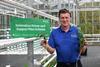
The country’s senior minister of state for sustainability and the environment, Zaqy Mohamad, announced the new funding at MSE’s Committee of Supply debate on 4 March 2026.
The funding, which will be disbursed over five years, is the second instalment of the Agri-Food Cluster Transformation (ACT) Fund which aims to support local farms boost capacity and capability.
“The first tranche of the ACT Fund, launched in 2021, has shown that Singapore farms can transform into advanced farming operations that are of higher yield, more pest- and disease- resilient and increasingly, climate-resilient too,” Mohamad said.
Since its launch, the ACT Fund has awarded S$55mn to nearly 150 projects.
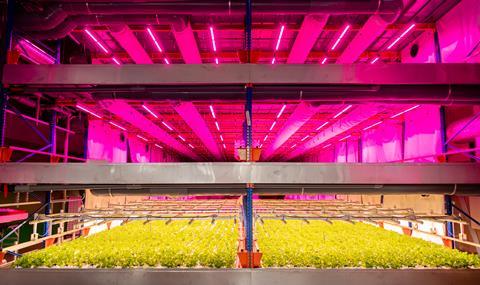
“The Fund has enabled both agri- and aqua-farms to adopt everything from simple, small-scale technologies like LED grow lights, automated feeders and automated irrigation systems that reduce manual labour, to large-scale farming systems in climate-controlled environments that guarantee year-round production regardless of the weather,” Mohamad explained.
Alongside the sfunding announcement Mohamad also shared a new funding component – the Industry Partnerships for Capability Transformation Grant – which will co-fund strategic partnerships between farms and ecosystem players to develop industry-wide solutions.
“Examples include farms and industry players collaborating on an integrated delivery system which streamlines the processes from farm to market, reducing transportation costs and improving product freshness,” Mohamad said.
These efforts make up part of the Singapore Food Story 2 strategy, which was unveiled in November last year. It aims to improve the country’s food resilience through four pillars: diversifying imports, growing local, stockpiling and forging global partnerships.
“As a country heavily reliant on imports, we are particularly vulnerable to external shocks and supply chain disruptions,” Mohamad said. “The latest chain of events in the Middle East only underscores this global climate of uncertainty.”
According to Mohamad the four-pillar approach enables Singapore to tap on different combinations to address different crisis scenarios, and to strengthen its overall food resilience.