Industry leaders welcome the proposed changes noting opportunities to bring more high-value varieties to market
The New Zealand government has announced plans to strengthen plant variety rights (PVR) in a bid to protect investments underpinning high‑value exports, regional jobs and global demand for New Zealand produce.
“High‑value horticulture relies on years, often decades, of breeding, testing and commercialisation,” said commerce and consumer affairs minister Cameron Brewer. ”Strengthening the Plant Variety Rights Act 2022 gives New Zealand the intellectual property settings it needs to compete internationally, protect our investment and grow export returns”
Trade and investment and agriculture minister Todd McClay added that these changes will provide vital support for growers.
“In 2024, 75 per cent of the NZ$3.5bn in export returns from kiwifruit and an estimated 55 per cent of the NZ$979mn in export returns from apples came from plant variety rights‑protected varieties,” McClay said. ”This shows the vital contribution that new plant varieties make to growing export earnings and taking us closer to New Zealand’s ambitious goal of doubling the value of exports in 10 years.”
Brewer noted: “Zespri’s projections show that extending the PVR term by five years for SunGold Kiwifruit alone would mean additional revenue of around NZ$1.8bn over five years from the time of the extension, to the kiwifruit industry and the Bioeconomy Science Institute. Growers will also benefit from additional returns as PVR varieties maintain their market value for longer, allowing growers to continue to build high value demand ahead of supply. Breeding and importing new varieties can be a long, expensive and uncertain process. Breeders and importers take a significant risk, and we need to ensure they are supported in this process.”
The New Zealand government is also restoring provisional protection, so breeders are covered from day one of their rights application instead of when it is granted.
“This means plant breeders can take immediate legal action if new varieties are stolen and commercially exploited during the application process, which can take up to five years and sometimes much longer,” Brewer explained.
“By providing greater certainty and support, we are empowering plant breeders to keep innovating – driving economic growth and ensuring New Zealand remains competitive on the world stage,” McClay said.
Zespri has welcomed the New Zealand government’s proposal wit Zespri CEO Jason Te Brake saying the changes would deliver real benefits for New Zealand by protecting growers, backing innovation, growing exports and supporting regional jobs and communities.
“Innovation is critical to protecting and growing value for New Zealand,” Te Brake said. ”In 2024/25, kiwifruit returned more than NZ$3bn directly to growers and their communities and supported tens of thousands of regional jobs.
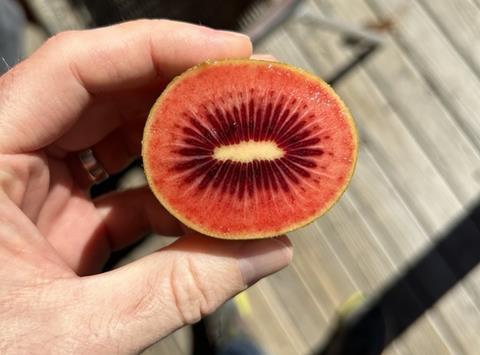
“Around 75 per cent of kiwifruit export sales comes from Zespri’s PVR-protected varieties – sold under the Zespri SunGold and Zespri RubyRed trademarks – highlighting the importance of a strong and effective IP framework.
“Through the Kiwifruit Breeding Centre, in partnership with the Bioeconomy Science Institute, we have invested for decades in developing high‑value new varieties to grow market demand and help growers respond to rising costs and climate change. These varieties – alongside continued investment in our brand, supply chain and building demand – are delivering significant value back to New Zealand.”
He added that stronger plant variety rights would help the industry invest with confidence, protect value, and bring more high-value varieties to market and support Zespri’s goal to grow sales revenue by two to three times by 2035 and support returns for shareholders.
“It will also give growers more confidence to invest in higher-returning new varieties and the long-term future of their orchards, while giving confidence and encouraging investment from businesses that support the industry,” said Te Brake.
“These amendments better align New Zealand with international settings, helping protect existing value, unlock future export growth, and keep New Zealand competitive in high-value horticulture.”
Te Brake said he was encouraged by the broad support for the changes from the kiwifruit industry and the wider horticulture sector and other stakeholders.
“We acknowledge the government’s engagement with the industry on these amendments and thank minister of commerce and consumer affairs Cameron Brewer for his efforts, and acknowledge the work of his predecessor Scott Simpson, as well as the support this has received from other parties,” said Te Brake. “We look forward to supporting the next steps as they progress through parliament’s full legislative process.”