Production issues and a greater focus on European market dent shipment volumes to US in first quarter of 2026
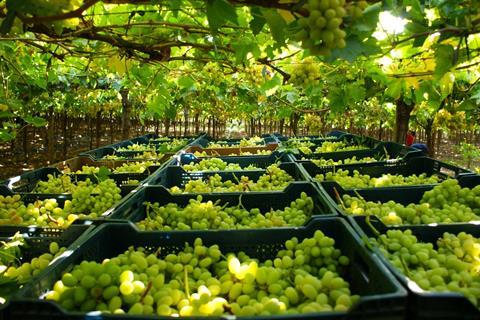
Shipments of Chilean grapes to the US were down 16 per cent to 18 April as a result of heavy rains and changing trade patterns, according to data from Sensonomic. The Norwegian agtech company said departure volumes from Chile to the US to 31 March were down 15 per cent.
Founded in 2015, Sensonomic provides an AI-powered digital platform for agricultural data collection, analytics, and modelling to improve crop yields and farm profitability.
According to the company, heavy rain in the Central Valley of Chile in March knocked back production. The highest rainfall was registered around San Fernando, Curico and Talca, with slightly lower levels in Rancagua and further north.
“Lacklustre performance in Chile’s other grape producing regions and changing trade patterns in Chile also contributed to the declines in volumes to the US,” Sensonomic said. “Overall departure volumes up to 31 March were down 82 per cent from Atacama and 9 per cent from Coquimbo season on season.
“As far as trade, Chile sent higher volumes to the Netherlands (+50 per cent) and Canada (+28 per cent), although less to China (-16 per cent) up to 31 March. Chile may have been taking advantage of an early end to South African imports in Europe.”
Sensonomic noted that the shortage in the US was exacerbated by Peru frontloading its exports toward the start of the season. At that time, prices were higher in the US, especially for white seedless, after an early end to the season for white seedless production in California. Arrivals from Peru to the US peaked in early January. Arrivals in February and March were otherwise lower than what they could have been had prices been more stable.
“There is a greater shortage of white seedless than red seedless in the US right now because of the varietal mix Chile is sending there. Up to 18 April, the white to red colour ratio from Chile was about 1.25:1 (14.7mn to 11.6mn 8.2 kg cartons),” the company said.
“Compare that to a 1.5:1 white to red ratio from Peru (31.1mn to 19.1mn cartons). Chile tends to ship even greater volumes of red seedless later in the season. White seedless from Chile appears to have already peaked shortly before the Marketing Order starting on 10 April, which requires grapes in the US to meet stricter standards.”
Sensonomic said the upshot of lower volumes is higher prices across all colour categories than last season, especially in white seedless varieties. Up to 18 April, terminal market prices were US$14.75 per carton higher for white seedless and US$8.07 per carton higher for red seedless. The increase in shipping point prices was lower: about US$8.93 and US$4.61 per carton, respectively.
“In the midst of this volatility, the Sensonomic platform can assist both exporters and importers,” the company said. “For exporters, it can help them document that they still have dry, high-quality fruit available. For importers, it can give them greater visibility of available supply from trusted partners to keep their programs running and avoid prorating and gapping.”