Industry bodies warn climate shocks and currency revaluation are driving up costs and putting 200,000 jobs at risk
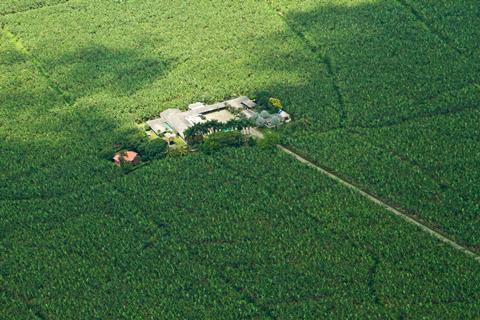
Colombian banana trade associations Augura and Asbama have issued a stark warning to European buyers and retailers: rising production costs, severe weather, and currency pressures are threatening the economic viability of sustainable banana production, putting over 200,000 jobs in jeopardy.
With more than 4,200ha of crops damaged by severe weather in recent months and an anticipated yield reduction of nearly 20 per cent expected for 2026, the industry is calling for shared responsibility across the European supply chain to absorb rising costs and preserve formal labour standards.
Climate pressures, currency appreciation, and soaring costs
In 2026, severe flooding impacted over 1,200ha of Colombian banana plantations, while strong winds damaged an additional 3,000ha. In addition to these weather events, Colombia’s Institute of Hydrology, Meteorology and Environmental Studies (Ideam) has raised the probability of an intensified El Niño phenomenon to 75 per cent, threatening further water stress and yield drops across key growing regions.
These environmental challenges coincide with financial headwinds for exporters. The appreciation of the Colombian peso against the US dollar has reduced local currency revenues for banana producers. Simultaneously, growers are facing higher prices for fertilisers and raw materials, a 23 per cent increase in Colombia’s national minimum wage for 2026, and substantial investments required for climate adaptation, water management, phytosanitary security, and international compliance certification.
A threat to 200,000 jobs
The Colombian banana industry directly supports more than 200,000 jobs. For over 38 years, producers and trade unions have developed a social dialogue model that guarantees formal employment, fair wages, and collective bargaining rights across producing regions.
“Colombia has proven that it is possible to produce bananas with formal employment, strong social dialogue, and high environmental standards,” said Emerson Aguirre, executive president of Augura. “What we are presenting to the European supply chain is that this model must also be economically sustainable. Producers cannot continue to absorb all additional costs alone without greater shared responsibility from market actors.”
Addressing the true cost of sustainability in Europe
As European supermarkets and consumers demand increasingly strict social and environmental standards, Colombian growers argue that the financial burden must be shared equitably across the supply chain – from growers to retailers – rather than shouldered solely at origin.
“What is at stake is not simply the production cost of a box of bananas,” said José Francisco Zúñiga, executive president of Asbama. “What is at stake is the type of supply chain Europe wants to build for the future. Colombia remains committed to being a reliable provider of sustainable bananas for Europe, but sustainable bananas cannot be sustainable only at the farm level – they must be sustainable across the entire chain.”