With year-round production and a focus on high-quality varieties, country aims to carve out successful niche
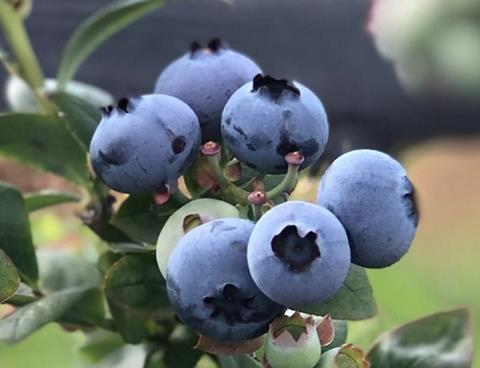
Ecuador exported 284 tonnes of fresh blueberries worth US$1.2mn between January and July 2026, figures from the Ecuadorean Federation of Exporters (Fedexpor) show. This represents an almost 400 per cent increase in volume and 800 per cent increase compared to the same period of last year.
While shipments are still dwarfed by those of other South American exporters like Peru, Chile and Colombia, the sector believes it can carve out a successful niche on the international market by offering a year-round supply of premium varieties.
Around 90 per cent of shipments currently go to the US and Singapore. However, the country is looking to expand its international presence through the negotiation of new phytosanitary agreements.
Most recently, it signed a protocol with the Chinese government paving the way for exports to this market. The agreement establishes requirements regarding the registration and approval of farms and facilities, phytosanitary management, the control of quarantine pests, and the processing, packaging, and certification of the fruit. And in July of this year, Ecuador announced a phytosanitary agreement with Panama. South Korea, Japan, India, the UAE, Saudi Arabia and Canada have also been identified as potential future markets.
According to Xavier Rosero, executive president of Fedexpor, blueberries are part of a broader strategy to position Ecuador’s offering of value-added agri-food products alongside other fresh and processed foods. The approach focuses on developing premium segments and incorporating varieties adapted to the country’s production conditions.
Data from the Ecuadorean Federation of Blueberry Producers and Exporters (Fepexa), there were around 400ha under cultivation as of 2025, with about 300ha already in production. The organisation, which represents around 20 producers, said it expects planted area to reach 1,000ha within five years.
Plantations are concentrated primarily in the Sierra (highlands), in provinces such as Carchi, Imbabura, Pichincha, Cotopaxi, Tungurahua, Azuay, and Loja. Production projects are also underway in the coastal provinces of Santa Elena, Manabí, and El Oro.
Like neighbouring Colombia, Ecuador is able to grow blueberries year-round thanks to its different production zones and microclimates.
Producers are also aiming to enhance the sweetness of the fruit and the presence of bloom, the natural waxy coating on blueberries that serves as a visual indicator of quality. The varieties currently planted include Emerald, Jewel, Legacy, Star, Atlas, Eureka Sunrise, Rocío, Matías, Biloxi and Sekoya.