Shipments reached 210.75mn boxes, driven by stronger demand in Russia, the EU and South America
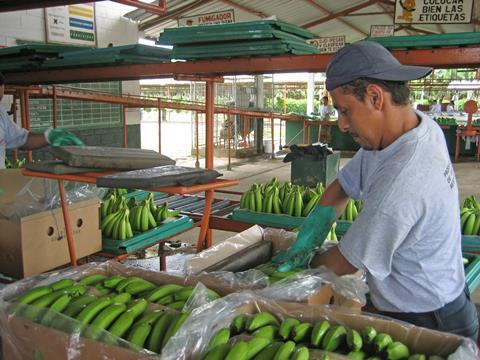
Ecuadorean banana exports maintained a positive trajectory during the first half of 2026. Between January and June, the country exported 210.75mn boxes, an increase of 5.5 per cent on the 199.75mn boxes shipped in the year-earlier period.
According to the latest report from Acorbanec, released on 30 July, the increase was driven by higher domestic production and more dynamic demand in strategic markets such as Russia, the European Union, and South American countries.
The European Union consolidated its position as the primary destination for Ecuadorean bananas, accounting for 33.44 per cent of total exports or 70.47mn boxes. Russia ranked second with a 20.64 per cent share (43.48mn boxes), followed by the Middle East (14.74 per cent share), US (11.15 per cent), and South America (6.70 per cent).
Acorbanec said the European Union was a key driver of export growth. Shipments to the bloc rose by 13.2 per cent between January and June, driven by increased demand from markets such as Spain, France, Italy, Poland, Greece, Finland, Sweden, and the Netherlands.
Russia also maintained a solid performance. Exports to that market grew by 10.63 per cent year-on-year. Russia remains the largest single buyer of Ecuadorean bananas, accounting for more than one-fifth of all shipments.
Shipments to other South American countries grew 9.01 per cent, with Argentina and Chile among the markets contributing most to regional growth.
According to Acorbanec, the positive export performance was supported by greater fruit availability. It reported a 1.79 per cent increase in bagging and harvesting operations compared to the previous year, aided by normal physiological development of the plantations, new production areas, and improved bunch yields.
However, the sector also faced weather-related challenges, in particular heavy rains and flooding in Los Ríos, Guayas, and El Oro. The association noted that it was closely monitoring production regions for potential effects associated with the El Niño phenomenon, which could impact output in the coming months.
While some markets gained momentum, others saw declines. Shipments to the US contracted by 9.25 per cent, while East Asia saw an 8.16 per cent drop, driven primarily by lower shipments to Japan and South Korea.
Acorbanec also noted that weather-related disruptions in Colombia and several Central American countries boosted demand for Ecuadorean fruit – particularly in Europe – by reducing the available supply from other regional competitors.