Exporters stepping up diversification efforts and banking on steady US demand to secure long-term growth
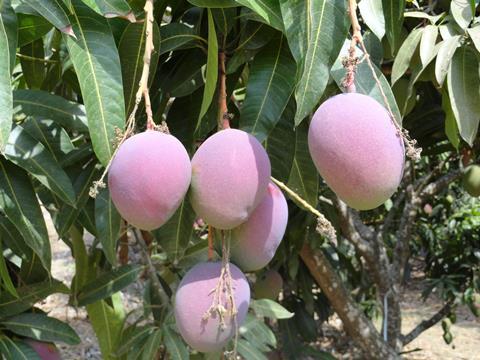
Ecuador’s mango industry is ramping up its market diversification strategy after a challenging 2025 export season marked by lower volumes, favourable pricing windows, and mounting cost pressures.
According to Bernardo Malo, president of national mango association Fundación Mango, Ecuador exported approximately 14.4mn cartons, 8 per cent down on the previous year’s total. Despite the fall, Malo says prices were relatively good, mainly because Brazil’s season ended early and Peru started late. “That obviously favoured Ecuador, as our production sits between those two countries,” he tells Fruitnet.
However, the industry faced significant headwinds in the US, its biggest market. Reciprocal tariffs of 15 per cent remained in place in the US until 13 November, on top of existing duties of US$0.66 per kg due to the absence of a trade agreement between the two countries, significantly increasing the cost of the fruit.
Ecuador currently has around 6,300ha of mango production certified for export, almost all located in Guayas province. The sector expects exportable acreage to grow by 5–6 per cent in 2026. Tommy Atkins continues to dominate with 62 per cent of total acreage, followed by Kent (18 per cent), Ataulfo (15 per cent), and smaller shares of Keitt, Haden and others.
The US remains by far the principal destination for Ecuadorean mangoes, taking around 90 per cent of exports, with the remainder going to Canada, Europe, Central America and smaller markets. For years now, however, the sector has sought to reduce its dependence on its biggest trading partner. Malo acknowledges that “this is not an easy task due to the limited interest in some markets for varieties with fibrous flesh, which are the main ones we produce because of our climatic conditions”.
Nevertheless, there is cautious optimism regarding the opening of new markets such as South Korea, where a phytosanitary protocol is already in place. The sector also maintains a constant presence at major international trade fairs in search of new commercial opportunities.
While Ecuador enjoys a favourable seasonal window, Malo admits there is limited scope to extend it due to climate. The focus instead is on smoothing harvest peaks. “What we are trying to do is achieve flatter harvests so that there is no oversupply and we can maintain healthy international markets from a commercial standpoint,” he explains.
The most pressing challenges, however, lie beyond the orchard. “The biggest issue facing Ecuador’s mango sector is the high production costs in the country,” Malo says, pointing to the long-term impact of dollarisation. Trade barriers and security concerns are also taking their toll on exports. According to Malo, “this has forced productive sectors to make significant investments in security, which are not easy to recover commercially”.