Study reveals how avocados reverse sexes throughout the day
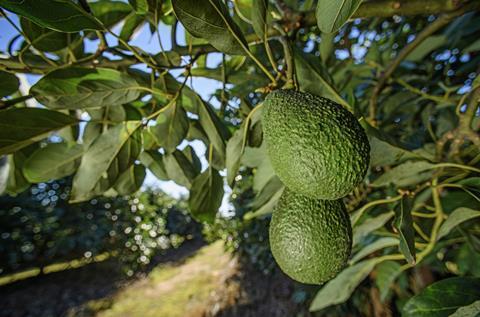
Researchers in the US have identified a genetic switch that could cut years off avocado breeding.
To avoid self-pollination, avocado trees alternate between opening male and female flowers at different times of day. Some avocados are female in the morning and male in the afternoon, while others are on the opposite schedule. Until now, the mechanism behind this has been unclear.
In a new study, a team led by researchers from the University of California, Davis, revealed that this rhythm is dictated by variation in a single gene that evolved about 42 million years ago. This finding could help avocado breeders and researchers quickly sort seedlings to maximise yield and develop new varieties.
“Our study provides a genetic explanation for a century-old mystery of avocado pollination,” said Jeffrey Groh, who led the project as a PhD student at UC Davis and is now a postdoctoral fellow at UC Berkeley.
“Flowers are not just static decorations; they are highly evolved and dynamic structures. We can see this in the pulsating rhythm of avocado flowers opening and closing throughout the day. Through the power of genetics, we can detect traces of this rhythm far into the ancient past.”
All avocado trees are hermaphrodites, but at any given time their flowers function either as male by releasing pollen, or as female by receiving pollen. Approximately half of all avocado trees (“A-type” plants) open female flowers in the morning and male flowers in the afternoon, whereas the other half (“B-type” plants) follow the opposite pattern.
This partitioning minimises the risk of self-pollination, which can result in inbreeding. Avocado breeders have known about this for over a hundred years, and because these two types easily pollinate one another, avocado farmers usually try to plant a mixture of A- and B-type trees in the same orchard.
“If every plant was male at the same time, and then female at the same time, there’d be no exchange of pollen,” said Graham Coop, UC Davis professor of evolution and ecology and a senior author on the paper. “Having these two types that reciprocally and synchronously flower male and female allows avocados to exchange and use pollen throughout the whole day.”
To identify the genetic mechanism behind this daily rhythm, the team analysed the genomes of hundreds of avocado trees grown by collaborating researchers at UC Riverside. By comparing the trees’ genomes in the context of their flowering behaviour, they were able to pinpoint a single gene called SDMYB that was associated with the tree’s A- or B- type schedule.
The study provides a genetic framework for easily categorising A- and B-type plants at the seedling stage – something previously only possible in mature, flowering plants.
“These genetic markers will greatly speed up avocado breeding and research,” said Coop. “This has been a major impediment for avocado breeders. Previously, you could not tell whether a plant was an A- or a B- type until it flowered, and avocado plants may take up to 10 or 15 years to flower in the first place.”