Corbana’s Danilo Bernardo hails “radical change” in new spirit of cooperation
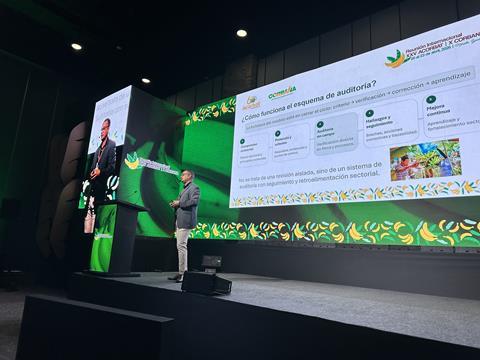
Around 1,200 people met in Mérida, Mexico last week for the 25th Acorbat International Meeting and 10th Corbana International Congress.
For three days, producers, exporters, researchers, and suppliers of goods and services analysed the main challenges facing the global banana industry, while exploring solutions to strengthen productivity, competitiveness, and resilience in an increasingly complex environment.
Corbana chairman Danilo Bernardo the event served as a platform for dialogue among key stakeholders affected by common problems and mark an important evolution in how the industry addresses its challenges.
“When you see that all the countries affected by Fusarium TR4 come together and share their experiences, both the good and the bad, from which we can all learn, I think it’s a radical change from how things have been done: communicating better than before,” he noted.
Participants agreed that these types of international gatherings not only allow for the updating of scientific and technical knowledge but also facilitate synergy throughout the banana value chain.
“We are very pleased to see so many people from other countries, because this forum lends itself to maximising knowledge sharing with suppliers and producers, and for us, generating synergies is always enriching,” said Jean Carlo Castillo, talent and culture manager at Grupo Chanitos.
From the academic sphere, the importance of staying aligned with the evolution of the sector was another key message during the congress.
Adrián Jiménez, commercial crops manager at Earth University, said: “It is essential to be aware of what is happening in the industry, what new tools are available, and how to address the main challenges through new commercial, agronomic, and operational crop management strategies”.
Technological innovation played a key role on the agenda, with discussions focused on how digital transformation is beginning to redefine the production, traceability, and sustainability of the crop. Among the most innovative topics highlighted was the use of blockchain applied to agri-food chains as a tool to strengthen transparency, banana traceability from the farm to the end consumer, and value creation in international markets.
Applications of artificial intelligence and precision agriculture were also analysed, aimed at improving decision-making in the field, optimising phytosanitary management, monitoring soil health, and anticipating production risks through data analysis.
These solutions, along with the use of drones, mobile applications, and digital production evaluation systems, reflect the banana industry’s progress toward more precise and efficient agriculture, aligned with the demands of global trade.
One of the central themes of the congress was the phytosanitary management of pests and diseases that pose a threat to global banana production. In this context, meetings of the Phytosanitary Command, specialised working groups, and various conferences were held, dedicated to challenges such as Fusarium Wilt TR4, Black Sigatoka, and Moko disease.
Carlos Urías, regional director of plant health at Oirsa, highlighted the need to strengthen prevention and control strategies beyond the farm level. “The first barrier we have against this problem is ports and airports. That’s where the media are,” he said.
Urías also highlighted the importance of comprehensive and coordinated management between the productive sector and governments, which would allow for a more effective response to these risks and sustain the transformation of the banana industry in the long term.