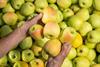
South Africa remains the market leader, expecting to ship around 21mn cartons this year, while Kenya has emerged as Africa’s second-largest exporter

Leading African avocado producers are continuing to grow their volumes, but in many nations the fruit continues to be mostly consumed locally, adding great value to their domestic economies.
South Africa remains the market leader in exports, this year hoping to ship around 21mn cartons. Local sales in South Africa, which are also growing rapidly, will probably double this volume.
Kenya meanwhile, is now one of Africa’s largest avocado exporters, ranking second only to South Africa, It exports over 80,000 tonnes of the fruit annually, generating significant revenue – particularly from the European and Middle Eastern markets.
In Tanzanian, sources say the country’s production of avocados could increase to 235,000 tonnes this year, with exports projected at 40,000 tonnes.
Then there is Zimbabwe and Mozambique, who are also hoping to become major players – although they will have to grow production considerably if they are to challenge the continent’s leaders.
Kenya’s avocado export industry is thriving, driven by increasing global demand and the country’s favourable growing conditions. The sector not only supports large-scale producers but also empowers smallholder farmers, making it a vital component of the country’s agricultural economy. With ongoing efforts to improve quality and expand market reach, Kenya is well-positioned to maintain its status as a top exporter in the global avocado market.
At present around 40 per cent of Tanzania’s avocados are exported to Europe where Denmark, France, the Netherlands, Norway, Spain, and the UK are important markets. India has also grown over recent years and now accounts for 30 per cent of Tanzanian exports, while 19 per cent of shipments go to the Middle East.
Tanzania has carved a niche for itself in India, thanks in large part to its early market window. The presence of important multinational companies like Westfalia, which has strong links with local distributors, has also helped boost Tanzania’s presence in India. Production has expanded significantly over the past decade, growing by an average of 20 per cent annually over the last five years.
Zimbabwe’s avocado industry is also growing rapidly, with production surging and exports set to exceed 6,000 tonnes in 2026, positioning the country as Africa’s fifth-largest producer.
Finally, Mozambique’s export association has been quick to promote the health benefits of its avocados. It highlights how the fruit contains healthy fats, which are a good substitute for artificial oily foods. Farmers in Mozambique are mainly focused on Hass, Fuerte, Gwen and Pinkerton.
Commercial avocado farming in Mozambique was introduced in 2015, with the first exports in 2018. Several South African producers are also involved with production in Mozambique.