The CGA has revised its 2026 season export estimates downward to 197.9mn cartons, citing the closure of Middle East trade routes as a major factor
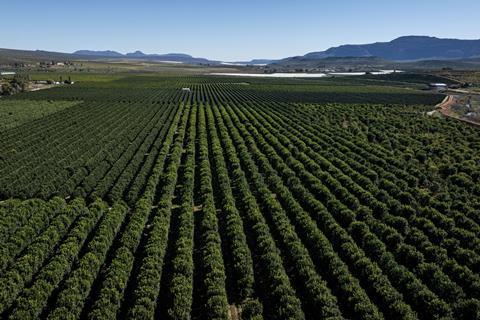
Export estimates for South African Valencia and Navel oranges have been lowered to 58mn cartons and 24.3mn cartons, a reduction of some 8 per cent and 19 per cent respectively from the opening estimates of the season.
The total export estimate for the citrus season across all varieties now stands at 197.9mn cartons.
In April the original estimate for the season was 209.4mn cartons, well below last year’s volume.
Citrus sources said the 2026 season has become a uniquely challenging one for Southern African citrus growers.
“As previously highlighted by the Citrus Growers’ Association of Southern Africa (CGA), the conflict in the Middle East is having a significant impact,” the association stated.
“The war closed off routes to markets that would ordinarily have absorbed a large share of our citrus. South Africa usually exports around 20 per cent of its crop to the Middle East.
”Apart from this redirection affecting prices in markets, the war’s economic repercussions have also led to a decline in global purchasing power this season, especially in middle class households,” the CGA noted.
At the same time, the conflict has disrupted the supply of empty containers, causing port congestion and driving up shipping and logistics costs, placing financial strain on growers.
“The war redirected fruit away from some of its usual destinations and into a narrower set of markets,” explained CGA chair Gerrit van der Merwe.
”We also saw a longer tail to the Northern Hemisphere supply, causing our early arrivals to overlap to a greater extent than usual and leading to early saturation in some markets.”
Recent reports claimed European producers are upset about the effect of high imports of citrus on their own industries.
The CGA said it is actively engaged in supporting and enabling the flow of fruit to where it will benefit growers most this season.
This includes supplying market intelligence and the timely sharing of critical information through stakeholder engagement platforms.
The CGA’s Middle East Crisis Committee, in particular, has done highly valuable work over the past months, it outlined.
South Africa’s citrus industry is currently focused on making sure fruit reaches markets in a predictable and disciplined manner, and recently called on all growers and exporters to ensure that they direct the right fruit to the right markets in order to protect the country’s reputation as a responsible supplier of premium quality fruit.
“Yes, 2026 is tough, but South African citrus growers have proven their resilience many times before, having weathered remarkable challenges over the years,” noted CGA chief executive Dr Boitshoko Ntshabele.
”The industry remains on a sound trajectory, and an unusually challenging season does not change a fundamental truth: sustainable growth in exports and export markets can boost job creation and economically uplift rural communities across the country.”