Production up 6 per cent on last year following benign winter and spring
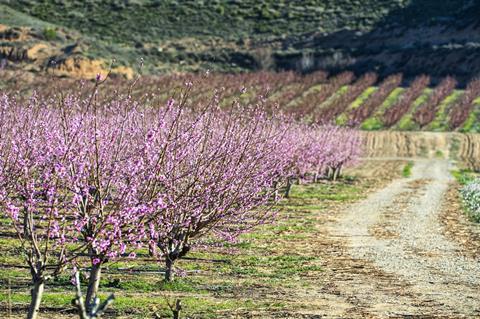
Spain’s stonefruit harvest is forecast to grow 6 per cent in 2026 to 1.51mn tonnes, according to Spanish agri-food cooperative group Coag. This is 14.16 per cent above the average of the last five seasons, heralding a return to form for the sector and consolidating Spain’s position as Europe’s leading producer, ahead of Italy, Greece and France.
The recovery is due to favourable climatic conditions last winter, the absence of widespread weather events, and an improvement in production potential in most Spanish growing regions. Even so, the sector said it remains concerned about costs, water availability, and the increasing phytosanitary restrictions imposed on growers.
Although there have been some rains during flowering, as well as isolated frosts and hailstorms, the sector said production is reaching the market in a balanced way.
By volume, nectarines are projected to be the leading stonefruit produced in Spain again in 2026. Output is forecast to grow 3 per cent on last year to 585,993 tonnes. Clingstone peach volumes are up 9.5 per cent at 316,312 tonnes, peach production is up 3 per cent at 311,779 tonnes, and flat peaches are projected to grow 12 per cent to 300,283 tonnes.
Most Spanish producing regions are showing stable or slight increases in production, although not all are evolving in the same way. Volumes in Extremadura will be down on last year, mainly due to fruit set problems and frosts recorded during part of the spring. Meanwhile, Aragon and Catalonia remain uncertain about the final outcome of the season, as the result will depend on the weather conditions in the coming weeks.
Not all stonefruit varieties are expected to perform well in 2026, however. Coag forecasts a 3 per cent drop in plum production due to fruit set problems, especially in Extremadura, Castilla-La Mancha and Catalonia.
Apricots, meanwhile, are expected to register a 7 per cent drop in production, with volumes reaching 110,120 tonnes. However, this represents a 13 per cent increase compared to the 2020-2024 average.
Javier Basols of Coag’s stonefruit subsector, said market behaviour would depend largely on summer temperatures in Europe. “The key will be that temperatures in the main European markets support and encourage consumption,” he noted.
Basols called for the value chain to allow for the fair transfer of increased costs borne by farmers and cooperatives. He also warned of two major structural challenges facing the Spanish sector: adaptation to climate change, and the growing restrictions on phytosanitary tools imposed on producers. He said both issues directly affect the competitiveness of European production compared to third countries.