China’s increasing dominance of the Asian market is encouraging many exporters to look elsewhere, with greater competition expected in Europe
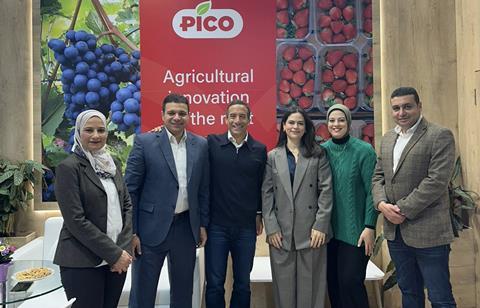
Egyptian exporter Pico is looking to maintain its presence in the UK, the company’s number one market, as competition appears set to intensify.
China is tightening its grip on the Asian market as it extends its seasons for products including grapes, citrus and blueberries, causing the window of supply to shorten significantly for Egyptian exporters.
As a result, many Egyptian companies are eyeing alternative markets, not least in Europe and the UK.
“The UK is a growing market, but it’s also a challenging one,” said Pico’s Nevine AbdelRasoul. “The dynamics in the market can be quite changeable, but it’s still got good potential.”
For Pico, the UK remains central to its strategy. “It has long been our main market,” she said, “so we have to understand its needs, how we can improve, how we can stay in parallel with our customers’ demands. What do they need and how can we provide it?”
However, the company is increasingly conscious of the changing competitive landscape, particularly in Asia. Pico’s Muhammad Fayed noted that Chinese citrus production was already encouraging some exporters to shift their focus away from Asian markets because of increasingly intense price competition.
Logistics have added to the pressure, he revealed, with the crisis in the Middle East affecting regional shipping routes.
“A lot of factors are contributing to make the Egyptian presence in oranges less and less,” confirmed Fayed. “Of course, you have Chinese oranges, with their cheap pricing and availability most of the year, which make them a good alternative to origins like South Africa and Egypt.”
Fayed said the same longer-term trend was becoming visible across other categories. China is increasing production of grapes and blueberries while investing heavily in breeding programmes, creating the potential for greater competition in regional markets.
“When we started our blueberry project in Egypt, East Asia was one of the main markets we had in mind,” he said. “Now it’s impossible to compete with Chinese blueberries while demanding decent prices.”
Pico is therefore watching developments closely while continuing to serve its customers in the region.“We are being cautious, but we are still doing business for now,” said Fayed. “We still consider Asia an important market. But what happens in the future, nobody knows.”
AbdelRasoul revealed Pico was also looking at opportunities in the Middle East, Africa and the Americas. “We have to penetrate other markets like Central Africa, the US, Canada and Mexico,” she said. “All these areas we have to explore more.”
At the same time, competition is intensifying in grapes, with production from several origins increasingly overlapping.
“At the beginning of our season we have Indian supplies, and India has started to grow premium varieties,” said AbdelRasoul. “These come in the latter part of the season, which means they will overlap with our standard variety.”
Spain then enters with its standard varieties as Egypt’s premium grape season progresses, while South Africa, Chile and Morocco add further competition.
“This season, Morocco and Spain started just as our premium varieties became available, so we have already seen sales affected,” she said. “All these overlaps affect all of us in the end.”
Fayed said the UK retail market nevertheless continued to offer opportunities to growers able to meet its demanding requirements. He highlighted the continued appetite among UK supermarkets for new grape varieties, genetics and flavours.
“We are not talking about only grapes – white, red and black,” he said. “Customers are becoming aware of new varieties and the different flavours on offer.”
For Egypt, Fayed hoped, the growing focus on varieties could play to its strengths. “If there is a new variety, you can find better taste and better quality in Egypt compared with other regions,” he claimed. “We have nice, moderate weather for grapes and stable conditions during our production period.”
Pico is also developing its berry business, although AbdelRasoul said blueberries remained at an early stage. The UK currently takes only one of the company’s blueberry varieties because of its early timing, when Spanish and Moroccan fruit is not yet ready.
Across the business, logistics of course remains a major concern. The regional crisis has pushed up fuel and transport costs, making it harder for exporters to compete.
“Every day you’re receiving notifications that the fuel cost has increased by 15 per cent, 20 per cent, 25 per cent,” said AbdelRasoul. “You’re paying for shipping, transportation, clearance and a lot of other costs. In the end, sometimes the price of the fruit is less than the shipping cost.”