Gas price volatility and restriction of key fertiliser inputs through Strait of Hormuz could impact UK growing season for key salad and veg crops
Price volatility in natural gas due to the escalating Middle East conflict could impact availability and cost of fertiliser, with knock-on effects on UK production ahead of a critical period for crop planting and harvest.
The price of energy, and in particular wholesale gas, are already seeing volatility, after the US and Israel began an air assault on Iran, prompting a series of retaliatory attacks across the region.
“The escalating conflict in the Middle East is of concern as any persistent impacts to global energy markets will have a knock-on effect on the future availability and price of fuel and fertiliser,” said NFU president Tom Bradshaw.
“We are seeing immediate price volatility but at this stage, it is too early to say how the UK may be impacted in the medium term,” he said.
Natural gas accounts for between 60-80 per cent of the input costs associated with production of nitrogen fertilisers.
In addition, about a quarter of globally traded nitrogen fertiliser is transported through the Strait of Hormuz, the key shipping route that has been significantly restricted since the conflict broke out, according to a Forbes analysis.
Qatar, Saudi Arabia and Iran itself are all key exporters of urea and ammonia used to make fertiliser, and which will be affected by the restrictions at Hormuz.
While growers are reportedly not yet making decisions based on the conflict, production of outdoor salad veg, field veg and indoor salad production are all at critical points for planting, growing and early harvest.
Fertiliser and fuel usage typically begins to increase in the coming weeks as spring planting begins.
“The cost of wholesale gas has already risen, which will affect both domestic growers and manufacturers of fertilisers that will increase the local cost of production,” said secretary of Lea Valley Growers Association, Lee Stiles.
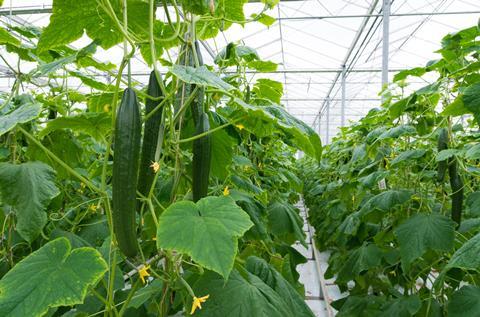
The Lea Valley cucumber season has already begun with peppers, tomatoes and aubergines due to begin picking next month.
But Stiles pointed out the UK is only 20 per cent self sufficient in those salad veg lines, with any overseas disruption likely to raise prices and make it more difficult, and costly, for growers to source plants, growing media or beneficial insects.
“Supplies will be tighter as European supermarkets will pay more and offer an easier logistical route for suppliers,” he said.
“These issues are in addition to domestic government policies that will see increases in energy standing charges and wages this year.
“Without an acknowledgment of the UK’s fragile food security or any support to incentivise domestic production, growers may decide to shorten the season should matters become financially unviable,” he added.
The news follows months of warnings by glasshouse producers that they are already facing a cliff edge of rising energy costs, with standing charges set to rise again in April.
There is also a growing focus on resilience of UK food supply chains, with a keynote address at last week’s NFU conference, given by Professor Tim Lang and warning of the need to increase homegrown production.