Discounter has overtaken Morrisons with a new record market share, as elsewhere inflation pressures ease slightly to slowest rate since December 2024
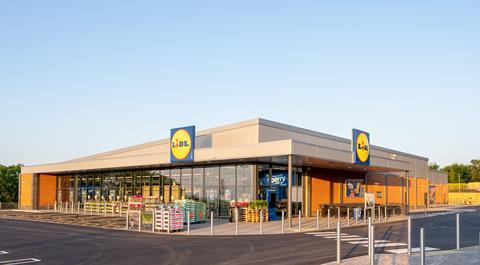
Lidl reached a new record high market share to overtake Morrisons and become the UK’s fifth largest retailer for the first time.
The new figures, released by Worldpanel by Numerator today (27 May) and covering the 12 weeks to 17 May, showed Lidl now has a market share of 8.6 per cent, ahead of Morrisons at 8.3 per cent.
It follows a quarter century of growth, as 25 years ago Lidl accounted for just 1.4 per cent of the market, behind names such as Safeway, Somerfield and Kwiksave.
The top five retailers in the UK now stand as Tesco (28.2 per cent), Sainsbury’s (15.2 per cent), Asda (11.5 per cent), Aldi (10.8 per cent) and Lidl (8.6 per cent).
Ocado was the fastest growing retailer once again, with sales up 10.2 per cent over the period.
Other retailers also saw increases during the period, including Tesco (+3.2 per cent), Sainsbury’s (+3.1 per cent) and Waitrose (+3 per cent). M&S saw its grocery sales increase by 9.3 per cent.
The four weeks to 17 May also saw inflation ease to the slowest rate in 18 months, with like-for-like grocery prices rising by 3.1 per cent, the slowest rate of increase since December 2024.
“The easing in the rate of inflation is welcome news for shoppers who have been grappling with warnings of a hike in food prices due to the impact of the war in the Middle East,” said Fraser McKevitt, head of retail and consumer insight at Worldpanel by Numerator.
The period also saw shoppers still heavily relying on promotions, with 30.3 per cent of sales including a deal last month, up from 28.4 per cent a year ago.
Take-home sales growth at the grocers increased by 1.5 per cent in the four weeks to 17 May 2026, according to the latest data from Worldpanel by Numerator.
The figures come as May played out across two very different bank holidays. A cool start led to lower sales for summer staples, but the recent heatwave is expected to have led to a significant uplift in spending on the same items.
Berry producers in particular have been forecasting high sales during the hot weather, coinciding with school half terms and the peak of British production.