Jeremy Sharp, projects and commercial manager at Produce Packaging, discusses the benefits of carton board and the firm’s recent advances in berry packaging
What are your latest innovations in fresh produce packaging?
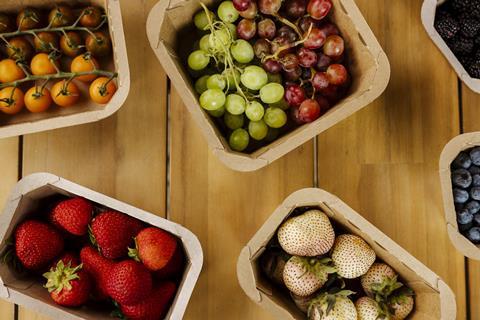
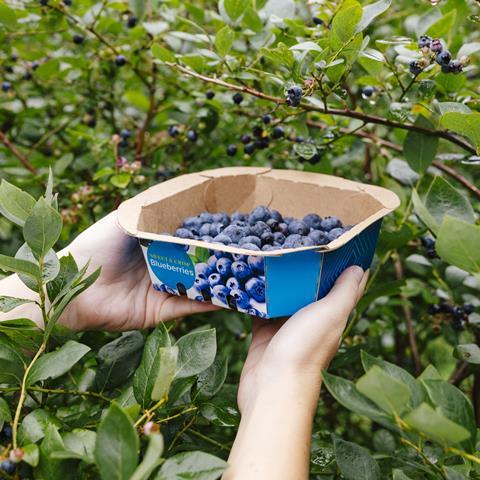
One of our most recent areas of innovation has been in paper-based packaging for soft fruit, particularly through our EverGrow carton board top-seal punnets, which will transition to EvoGrow with improvements during 2026. In partnership with Smurfit Westrock, we have been supplying these carton board punnets to retailers via their growers and packers since 2024.
The initial focus was simply on providing a robust paper-based alternative that could work reliably throughout the fresh produce supply chain, from packing lines through to the retail environment. That was very much stage one – demonstrating that carton board punnets could perform effectively at scale for soft fruit.
Stage two is where the real innovation continues. Over the last two years we’ve learned a great deal from working with growers, packers and retailers in live production environments. For 2026, the focus has been on applying those lessons to deliver continuous improvement across the range.
That has included a global search for production machinery specifically tailored to these types of carton board packs. By identifying and developing equipment designed around the product and the packaging format, we’re able to deliver improvements in efficiency, consistency and performance across the product range, helping growers and packers transition to paper-based formats without compromising operational efficiency.
What makes EvoGrow punnets new and different?
The thinking behind EvoGrow was very much about evolution rather than reinvention. After introducing our carton board soft-fruit punnets to the market, we gained valuable insight from growers, packers and retailers using them day to day. EvoGrow is the result of taking those learnings and refining the product to deliver a stronger, lighter and more consistent punnet that is also more cost-effective to produce.
It will be introduced across the current range over the coming months, forming the next stage in the development of our paper-based packaging solutions. Alongside improvements to the punnet itself, we’ve also made multiple adjustments to the manufacturing process. A key part of this has been significant investment in new bespoke production machinery, designed specifically for these carton board formats.
This new production capability is rapidly scalable, which allows us to respond more easily as demand grows. It also gives us the flexibility to develop new models quickly as different products and retail requirements emerge.
Carton board as a material also offers advantages beyond the structural performance of the pack. It provides a strong platform for branding and product presentation, giving growers and retailers the opportunity to present their produce in a very different way compared with the more generic plastic packaging that has traditionally dominated the sector.
What were the main challenges when developing the packaging?
One of the main challenges in developing new packaging for fresh produce, particularly for soft fruit, is that the packaging plays such a critical role in protecting a very delicate product. Crops like berries and salads rely heavily on the structure and performance of the pack to protect them through the entire supply chain, so any alternative to plastic must deliver the same level of reliability.
Historically, the options have been quite limited, and some early alternatives have not always been as environmentally sound as they first appeared. For example, some sugar cane–based punnets were introduced as early alternatives, but they brought their own environmental considerations in terms of raw material sourcing and transportation. That has led the industry to look more closely at materials such as carton board from sustainably managed forestry, which can offer a more balanced and practical solution for retail supply chains.
Another significant challenge is ensuring that any new packaging performs throughout the whole production and distribution process. Fresh produce packaging must withstand the entire cool chain, from blast-chilling immediately after harvest through to transport, storage and retail display. For that reason, any change in material requires extensive testing.
Cost is also an important consideration. Alternative materials can in some cases be close in price to plastic equivalents, particularly at larger volumes, but depending on the format they can also be significantly more expensive. As with many materials, supply and demand plays a large role in this. We have already seen how moulded fibre has become more cost-competitive over time as adoption has increased, and similar dynamics are likely to influence the wider development of alternative packaging formats in the years ahead.
Supply chains are increasingly being challenged by climate and logistical volatility. What are you doing to stretch products’ shelf life with your packaging?
Supply chains are certainly under more pressure than ever, whether that’s due to climate variability, logistics or simply the longer routes that fresh produce often has to travel. From a packaging perspective, our focus is always on protecting the product and maintaining its quality for as long as possible once it’s packed.
Over the past decade we’ve carried out extensive trials with retailers and producers to understand how alternative materials perform in real supply chains. What we’ve found is that moving from plastic to paper-based packaging hasn’t shown any detriment to the product in terms of shelf life, and in some cases can improve it.
A good example is tomatoes on the vine. In paper-based packaging the material naturally absorbs some of the moisture within the pack atmosphere. That helps to reduce the conditions that allow fungus to develop on the vines, which can effectively extend the shelf life of the product.
So, while the driver for these materials may initially be sustainability, there can also be very practical benefits in terms of product performance across the supply chain.
How is the EU’s incoming ban on plastic fruit and vegetable packaging affecting your plans and NPD?
The EU’s incoming ban on certain plastic fruit and vegetable packaging is very much in our thoughts when it comes to product development. As a packaging supplier, our role is to ensure we can provide the right solutions for our clients as legislation and market expectations evolve.
However, in practice, packaging formats are still largely driven by the needs and ambitions of the retailers themselves. They ultimately set the direction for the specifications their suppliers work to, so our focus is on developing a range of viable alternatives that allow growers and packers to meet those requirements as they emerge.
It means continuing to invest in the development and testing of different materials and formats, particularly paper-based options, so that when retailers or producers need to adapt to new legislation or market demands, there are already well-proven solutions available that perform effectively across the supply chain.