Westfalia has been impressed by how quickly the Indian market has shifted to pre-ripened avocados. Now, the company is doubling down on delivering a consistent eating experience to consumers
India’s burgeoning avocado market has come a long way in a short period of time, according to leading supplier Westfalia, but the company still sees enormous potential to further develop consumption.
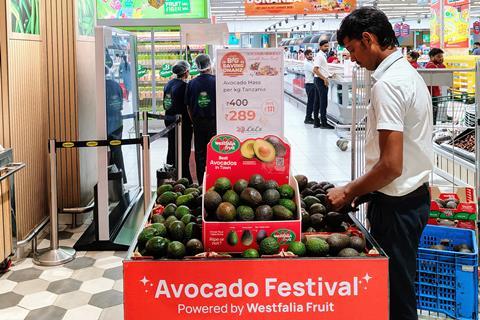
“When we launched our first avocado ripening room in Mumbai around two years ago, we thought it would take a long time to shift this market [towards ripened fruit] because India is a wholesale-first market in terms of where it buys its food,” explains Ajay TG, general manager of Westfalia Fruit India.
“In the wholesale market, everyone wanted rock-hard, green fruit and if the fruit started ripening it was sold at a lower price at a loss, so the market was not able to take it.”
Westfalia remained committed to delivering a pre-ripened product, and two years on, it has made strides. From a solitary ripening facility in Mumbai, it has expanded its distribution and ripening network across the country.
“We now operate out of four large ripening rooms across four big cities,” explains TG. “These four hubs form the spokes for 12 smaller cities close by. So altogether we operate out of 16 cities, giving us the widest network for avocado distribution in India.”
Quick commerce drives ready-to-eat
E-commerce has been a key factor in transitioning the market to ready-to-eat avocados, he says. This has been driven by the rise of quick commerce with its ultra-fast delivery model, typically fulfilling orders within 10-15 minutes, TG notes.
“Our volumes into e-commerce have doubled or tripled over the past year, and quick commerce is still the fastest-growing segment,” he says. “Quick commerce is not just confined to the major metros now either. It’s moved beyond those top ten cities to reach 50 or 60 cities. Now the question is, how much more can we grow? It’s not just the volume but penetrating new consumption centres.”

Westfalia has been careful to develop a distribution and ripening model that is tailored to the Indian supply chain.
“We’re not trying to bring a European solution to India,” TG points out. While Westfalia has made significant strides, he says it remains a “work in progress”. “We’ve done a lot in the past couple of years but now it’s about how we can ensure a good eating experience every time for the consumer, and not just in the three or four major cities, but across the country,” he says. “That’s the main challenge because currently there’s a lot of variability in how we handle the fruit; it’s something we’re focusing on, and we want to get better at.”
Westfalia is able to access consumer insights from quick commerce customers to support this drive, and it’s working in partnership with them to grow the category. “We track the category closely with them,” says TG. “We want to see what the consumer complaints are. What are the quality issues or fill rate issues? What is the availability and consumption level like in different pin codes?”
Foodservice opportunity
While the majority of Westfalia’s pre-ripened avocados are currently supplied into e-commerce channels, the foodservice sector also holds exciting potential, TG notes.
“We’re focused on developing the food service market,” he says. “The biggest challenge is that hotels and restaurants have not been getting a consistently good product, and we see that as a pain point, so we’re working on that.”
The fragmented structure of the foodservice sector poses a further challenge.
“With e-commerce, there are four or five larger players, so demand is more aggregated,” he says. “But the moment you go into Horeca, you’re going through wholesale channels, and a lot of small suppliers. So we’re trying to organise that and develop distribution programmes.”
Import volumes double
Turning to India’s overall avocado consumption, TG says the market is enjoying consistent growth. Import volumes doubled year on year in 2025 to reach around 19,300 tonnes, although it was not all smooth sailing.
“The market was oversupplied for a period earlier in the year. Then, later on in the season we could see consumption had grown. It’s not just a supply-push that has been growing the market, but a demand-pull that started in the second half of the year. A lot of people were offered fruit at low prices enabling them to experience the fruit, and many of those customers have come back.”
Indeed, TG says India remains a “supply-constrained market” owing to the relatively small number of countries with market access. “There are only a few supply origins we can work with, so that limits the growth, and I see this being a challenge for the next two or three years until new suppliers gain access.”
Tanzania has emerged rapidly to become the dominant supplier. The East African nation now accounts for some 90 per cent of India’s total avocado imports, aided by its duty-free access and short transit times of around ten days by sea.
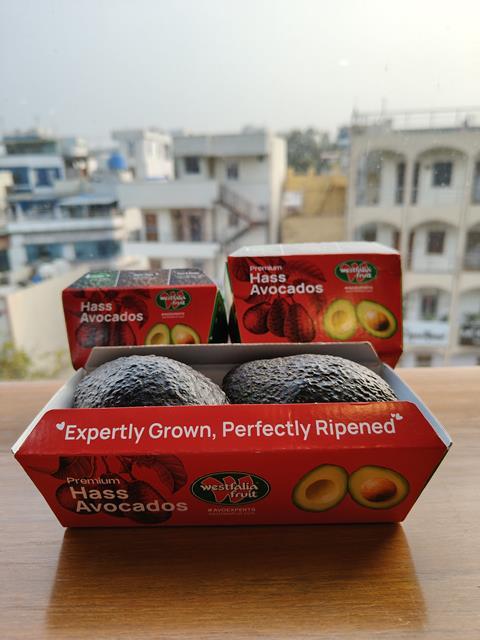
TG says Tanzania represents an excellent supply origin with “some of the best eating avocados in the world”, but the fragmented nature of the industry means exports are unstructured.
“Last year, there were around 120 importers of avocados to India sourcing from 70-80 exporters,” he says. “Many of them are speculators who don’t understand the product and they’re picking immature fruit to fill windows where the market is hot, particularly in February-March. That creates short-term problems, and for the next few years we’ll see these disruptions take their toll on consumption and the consumer experience.”
Tanzania will remain the dominant supplier of imported avocados in the short term, particularly with its duty-free advantage, TG notes. Australia has been performing well, supplying “good quality” fruit, and Western Australia is a key source in the November to February period, he adds. Kenya also has supply windows early and late in the season fitting around Tanzanian production. Opportunities for South Africa are currently constrained by sharing the same season as Tanzania, but TG is bullish about the future.
“The market in India will outgrow Tanzanian’s total production in the next three or four years, and South Africa [and other suppliers] will come in on the back of that.”
This article was originally published in Asiafruit Magazine’s Fresh Produce India edition, which features an indepth report on the Indian market. Subscribe to Asiafruit here.