After six years of negotiations, Vietnam has approved a phytosanitary protocol for Italian kiwifruit imports
Vietnam has officially opened its market to kiwifruit imports from Italy, following around six years of complex negotiations, a breakthrough which is expected to present exporters with “new and significant opportunities” in what is fast emerging as a strategically important Far East market.
Fresh produce organisation CSO Italy, which has played a central role in securing that new access, said it was already preparing a list of orchards and packhouses permitted to ship kiwifruit to the Asian country when the new season begins later this year.
“The opening of the Vietnamese market to Italian kiwifruit is a significant achievement, long-awaited by our supply chain,” commented Simona Rubbi, the group’s head of legislation and certifications. “This result confirms the importance of collaboration between companies – CSO Italy, the National Plant Protection Service, regional plant protection services, Masaf, and the Italian Embassy in Hanoi. Our thanks go to everyone.”
Vietnam and other parts of south-east Asia are regarded as highly attractive potential destinations for Italian fruit and vegetables, and in particular kiwifruit, one of the country’s flagship fresh produce exports.
The Vietnamese authorities began examining a dossier proposal back in 2020, after completing a similar process for apples in 2019.
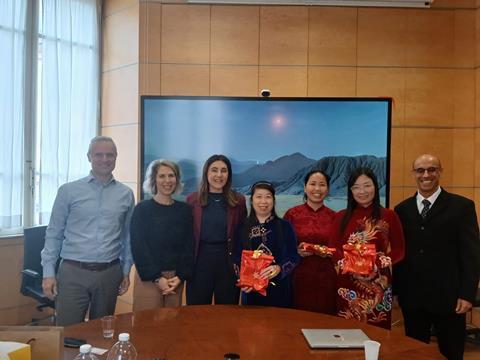
Last December, a delegation of Vietnamese inspectors visited Italy, accompanied by members of CSO Italy, to see first-hand the phytosanitary conditions outlined in the draft protocol, as well as the level of organisation and technological sophistication in Italy’s kiwifruit supply chain.
Now approved, the protocol includes “feasible but challenging” pre-conditions that must be met.
As well as import permits, cold treatment is also required – in transit or before departure – for at least 15 days at a temperature of 1.11°C.
“We are presented with a very significant opportunity, but also a collective responsibility,” Rubbi noted. “It is essential that operators begin exporting only if they are fully capable of ensuring compliance with all the requirements set forth in the protocol.”
She continued: “The error or interception of even a single shipment could jeopardise years of work and jeopardise market access. Therefore, it will be essential to proceed with rigour, prudence, and a great sense of responsibility.”