One senior executive sees “huge” potential to increase fruit consumption across the market
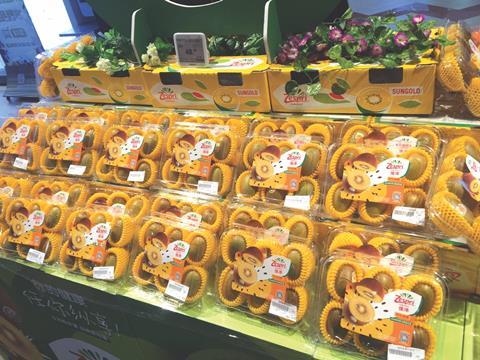
Zespri has seen significant growth in China since it entered the market in 2008, but, according to a senior executive of the New Zealand-based kiwifruit marketer, there is still “huge” room for growth.
Michael Jiang, president of Zespri Greater China and APAC South told local publication, China Daily, that Zespri’s sales volume in China has grown by nearly 20 times in the past 15 years and is estimated to keep increasing by almost 10 per cent in the next five to ten years.
“China’s whole fruit consumption market, especially the high-quality fruit consumption market, contains great opportunities,” Jiang told the publication.
“Currently, the average fruit intake of a Chinese consumer per year is 40-50kg. However, it is recommended by the National Health Commission that an adult should consume at least 70kg of fruit every year. There is a huge gap.”
Despite selling significant volumes, Zespri’s consumer penetration rate is less than 30 per cent, according to Jiang.
“Therefore, there is [still] huge room for growth,” he said. “I hold great confidence in China’s high-quality fruit consumption market.”
Lin Xianping, secretary-general of the Institute of Cultural and Creative Studies at Hangzhou City University agreed that China’s fruit consumption still shows significant potential for development.
“With the continued development of the national economy and improvement in people’s living standards, fruits, as an important component of a healthy diet, have seen a steady increase in consumer demand,” he told China Daily. “At present, there is still room for improvement in per capita fruit intake in China, and there is a certain gap compared to the recommended standards of the national dietary guidelines, which reflect the future growth potential of the market.
“At the same time, the trend of consumption upgrading has driven demand for high-quality and diversified fruits, and technological progress has also brought efficiency improvements to the fruit industry’s planting, storage, logistics and sales processes. Overall, the fruit consumption market is in a stage of expansion and structural optimisation, which is in line with the national policy orientation of promoting healthy consumption and agricultural modernization,” he added.
Jiang said Zespri also had room to grow in its availability. Zespri’s kiwifruit is currently only available for nine months of the year in the China market. With continued investment into the market including across research and development, brand image building and marketing, it has plans to expand this availability to the full 12 months.
This season, Zespri will maintain a stable supply to China, with a total of 18 bulk carriers set to arrive at the port throughout the year. The marketer expects to send approximately 46mn standard retail boxes of kiwifruit to the market, of which about 1.8mn will be Zespri RubyRed.