Climate change and disease pressure are making gene-editing increasingly important to the future success of the banana sector, argues agri-scientist James Dale
Unless the vast majority of scientists are wrong, which is extremely unlikely, then the next 75 years are going to be much more challenging for crop production, including for bananas. With rising temperatures and increasingly erratic weather patterns leading to more frequent and severe droughts, more devastating storms, and flooding, our food systems will become less reliable and less productive. There are already indications of this for banana production in the Americas.
The two dominant types of Cavendish, Grand Nain and Williams, differ in their performance in different climatic conditions. Grand Nain outperforms Williams when growing conditions are near ideal. The opposite is true when conditions are less than ideal.
Grand Nain has been the choice in the Americas until recently. There is now a significant increase in demand from the large growers to replant with Williams. These growers have clearly recognised that conditions are changing and are making large investments, a portent of things to come.
In a very recent study, a multi-disciplinary team from the UK and Costa Rica have forecast a 60 per cent reduction in the area suitable for export banana production across Latin America and the Caribbean due to rising temperatures, labour shortages and infrastructure. Those developing new varieties, including my team, are only just now coming to grips with how we can build climate resilience into the next generation.
Many questions remain. What traits do we ‘breed’ for: drought tolerance, heat tolerance, or maybe shorter stature and stronger stems to withstand damaging storms? What are the resilience genes and where will they come from?
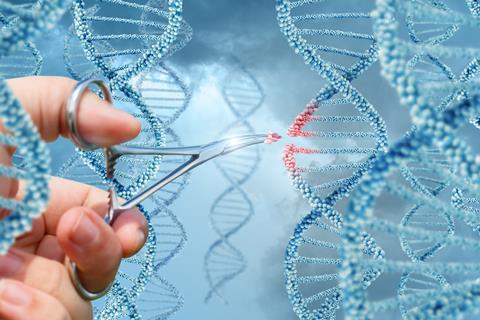
What, then, does the future of bananas look like? The future does not depend on technologies. These are effectively a given and they are constantly being improved, invented and developed. We must be able to genetically improve bananas continuously so that they can be produced in ever more challenging environments with the minimum amount of chemical inputs, and the maximum genetic diversity. The technologies to achieve these outcomes are either already available or will be within a decade. The problem is regulation.
North America is setting the pace for crop innovation and much of South America is close behind. If Europe decides that gene-edited and cisgenic crop varieties are not to be regulated, then much of Africa will likely follow. Asia is more difficult to predict as the huge domestic food markets of India and China will independently decide whether to regulate or not.
India has already released gene-edited rice. If Europe fails to adopt their proposed ‘no regulation’ position in this decade, or if the proposal is overly modified, at best there will be segregation, with a diversity of new banana varieties going, for instance, to North America, and a single variety going to Europe.
The future impacts of diseases and climate change must surely outweigh apprehension or indecision about harnessing advanced genetic technologies, let alone the opportunity to enjoy the amazing diversity of flavours, colours and even health benefits that are technically within our grasp. For once, let us conserve, improve and enjoy these ancient fruits of the forest rather than casting them aside for a few replacements, which themselves will eventually need to be replaced.
The choice is ours.
Edited extract taken from The Future of Bananas by James Dale, out now from Melville House UK. The book was written before the EU approved the future commercialisation of gene-edited crops in June 2026.
In the book, the Australian agricultural scientist traces the history of the banana to understand why it is such an important fruit, why its future is under threat, and why the western world is obsessed with one variety: the Cavendish.
Using the latest cutting-edge research and technology, Dale’s book presents a vision for saving the world’s most eaten fruit, which is on the path to extinction. The author and his team at the Queensland University of Technology have in fact created the world’s first genetically modified banana approved for commercial production, called QCAV-4. Could this be the future? And what else might be in store?