Port describes a 2.4 per cent drop in first-half 2026 cargo volumes as “relatively limited” given challenging conditions
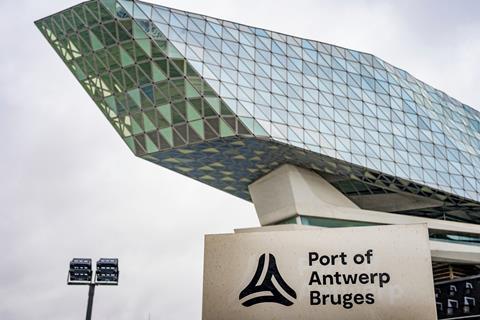
The Port of Antwerp-Bruges handled 133.9mn tonnes of maritime cargo in the first half of 2026 (H1), a decline of 2.4 per cent year-on-year.
It said that, against the backdrop of geopolitical tensions, trade conflicts, exceptional operational disruptions and a challenging economic climate, the decline was ”relatively limited”.
Container throughput came under pressure in the first half of 2026 and was the main cause of the decline in total cargo handling, it said.
Expressed in TEU, throughput fell by 1.5 per cent compared to an ”exceptionally strong” first half of 2025; in tonnes, the decline was 3.6 per cent.
Exports of full containers in particular fell behind, down 5.7 per cent, reflecting ”the weak export position of the Western European economy”.
The decline was exacerbated by exceptional operational disruptions, the port pointed out, with a four-day strike in the nautical chain in March resulting in an estimated loss of 100,000 TEU, followed by an oil spill in the Deurganck dock in April, which caused an additional loss of approximately 85,000 TEU.
In June, industrial action by pilots once again caused disruptions and resulted in an estimated loss of 75,000 TEU.
Geopolitical developments in the Middle East had a “clear impact” on trade flows, the port confirmed, as did US trade policy.
Despite the challenging market conditions, Port of Antwerp-Bruges was able to stabilise its market share, while new developments within the container alliances strengthened its position.
”The first half of the year shows that Port of Antwerp-Bruges continues to play its role as a gateway to Europe, even in exceptional circumstances,” said Rob Smeets, CEO of Port of Antwerp-Bruges:
“Trade flows are continually adapting to the new geopolitical reality. This demands flexibility from our port community and underscores the importance of continued investment in capacity, efficient infrastructure, and sustainable logistics.
”At the same time, the international context remains extremely uncertain,” he added. ”That is why Europe must continue to focus on a strong industrial policy and a competitive investment climate.”