Acreage has seen a 14-fold in nine years, with the region now accounting for almost a quarter of national output
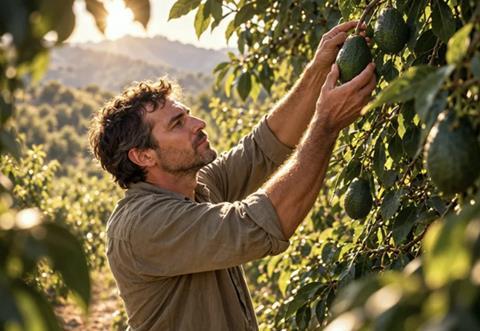
The rapid expansion of avocado production in the Valencian Community came under the spotlight at the 4th International Avocado Cultivation Forum (AguacateForum 2026), organised by the Association of Avocado Producers (Asoproa) and Ava-Asaja, which took place in Valencia this week.
Acreage has risen from just 279ha in 2016 to 3,855ha in 2025. Production reached 32,382 tonnes last year, equivalent to 22.5 per cent of Spain’s total output.
The figures were presented by Miguel Barrachina, the regional minister for agriculture, water, livestock, and fisheries, who noted that the avocado has become viable alternative to citrus and other less profitable crops for many farmers in Valencia. In 2025, the Valencian Community exported €43.3mn of the green fruit, 88.8 per cent of which went to the European Union.
Barrachina highlighted the region’s proximity to the European market as one of its main advantages and said efforts to differentiate Valencian avocados should be strengthened through initiatives like the Aguacate Valenciano quality seal, launched by Asoproa in February of this year.
The minister also touched on some of the challenges facing the sector, including water availability. With avocados requiring between 6,000 and 7,000 cubic meters of water per hectare each year, Barrachina said it was essential for the region’s growers to improve irrigation efficiency and invest in precision agriculture.
The Valencian Institute for Agricultural Research (Ivia) recently announced plans to pursue six specific lines of work in avocados, focusing on genetic improvement, salinity tolerance, fertilisation, plant health, and post-harvest preservation.
At the same time, trials conducted at the experimental stations in Carcaixent and Vila-real to analyse new varieties, along with techniques to improve fruit set, and more efficient production systems.